
Ground support equipment leasing: aviation purchase planning and costs
Compare ground support equipment leasing by asset scope, service responsibilities, end-of-term costs and purchase documentation.
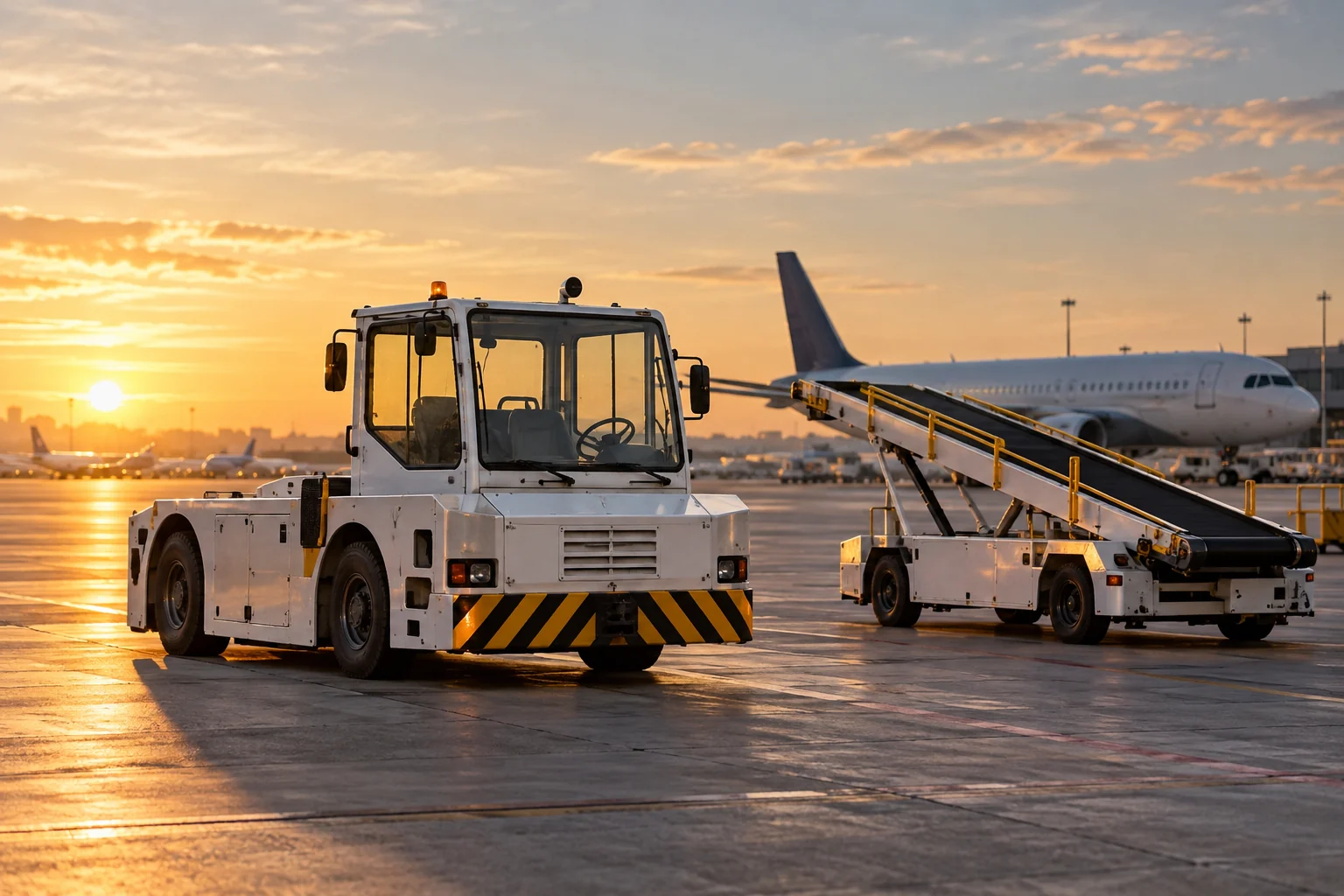
Ground support equipment leasing should be compared by the equipment and service obligations it covers—not the monthly payment alone. A lease of a specific asset, a short-term rental and a full-service fleet arrangement can leave very different responsibilities with an aviation business.
Start by identifying the ramp function, exact equipment configuration, site requirements and expected period of use. This guide concerns ground support equipment, not aircraft finance, flight operations or a general promise that aviation assets qualify with Dengaro.
TCR's current website lists full-service rental, sale-and-leaseback, repair and maintenance, and fleet management as separate services. That shows why a generic “GSE leasing” enquiry needs a more precise scope. It does not establish the terms available to your business or any relationship between TCR and Dengaro. TCR GSE services
Define the ground task before requesting finance
TLD's product range includes categories such as aircraft tractors, baggage tractors, belt loaders, ground power units and passenger steps. These are different purchases even though they share the GSE label. Its manufacturer catalog was reviewed on October 30, 2026. TLD ground support equipment
Have qualified operational personnel define the actual equipment requirement. The finance request should use that approved specification rather than ask a lender to determine compatibility with an aircraft or airport.
Document the location, expected term of use, proposed equipment condition and seller. Clarify whether this is a replacement, a fleet addition or equipment for a temporary contract. A machine selected for a short contract should not be justified using utilization that assumes the contract will automatically renew.
Distinguish the transaction types
Ask the provider to explain the specific proposal in plain language:
| Proposal | Questions that affect comparison |
|---|---|
| Purchase with financing | What is financed, what is paid upfront and what remains due? |
| Equipment lease | What are the term, ownership or return provisions and end obligations? |
| Short-term rental | What use limits, availability conditions and extension terms apply? |
| Full-service arrangement | Which maintenance, replacement and response commitments are included? |
| Sale-and-leaseback | What existing asset and valuation are being considered, under what terms? |
These questions do not determine legal or accounting classification. Have qualified advisers review the contract where needed. Avoid assuming that a service label means the supplier absorbs every repair, insurance or downtime cost.
A financing comparison is meaningful only after the operational team confirms that each equipment proposal fits the same requirement. A cheaper payment on an unsuitable configuration is not a saving.
Make the service boundary visible
For each proposal, identify who handles scheduled maintenance, unexpected repairs, transport, inspections and replacement equipment. Ask which obligations are excluded and how service will work at the intended location.
For electric equipment, have qualified specialists review charging and facility requirements. Do not assume that a vehicle quotation includes the infrastructure, permissions or installation needed at the site. Treat any such work as a separate scope until it is expressly included.
Ask what happens when an asset is unavailable. A vague promise of support is not the same as a written response commitment or a defined replacement arrangement. Also determine whether the contract restricts relocation to another airport or changes in use.
These are procurement questions, not instructions for airport operations, aircraft movement or equipment installation. Those decisions remain with qualified personnel and the relevant authorities.
Build an itemized acquisition budget
Consider this fictional equipment purchase, provided only to show the arithmetic. These figures are not GSE market prices or an offer.
| Assumed item | Amount |
|---|---|
| Approved ground support asset | $95,000 |
| Required equipment accessories | $12,000 |
| Transport and handover | $6,000 |
| Training and commissioning | $4,000 |
| Initial purchase total | $117,000 |
If a proposed financing arrangement covers $107,000 of equipment and accessories, $10,000 remains outside that amount. Ask whether delivery, commissioning or other costs can be considered rather than assuming that the full project total is eligible.
Keep operating expenses and facility work visible in separate tables. Do not conceal them by treating the base asset price as the complete cost of starting the operation.
Compare the same end position
A fictional payment comparison illustrates why the last payment matters:
- Proposal A: $10,000 upfront plus 48 payments of $2,200, with no additional assumed purchase payment. Total listed cash outlay: $115,600.
- Proposal B: $4,000 upfront plus 48 payments of $1,900 and a specified $25,000 end purchase payment. Total listed cash outlay if purchased: $120,200.
B has the lower periodic payment but costs $4,600 more in this limited cash comparison. These invented numbers are not rates or provider offers. They exclude fees, tax, insurance, service differences and the time value of money.
If B instead requires returning the equipment, do not present that return scenario as equivalent to owning the asset under A. Compare the actual end position and return obligations. A qualified adviser can help evaluate contract and financial consequences.
New and used equipment need different evidence
For new equipment, obtain the exact configuration, delivery terms, warranty, commissioning scope and acceptance requirements. Ask what the supplier needs from your site before delivery and who verifies readiness.
For used equipment, add the serial number, service records, condition assessment, included accessories and support arrangements. Have qualified specialists verify fitness for the intended task. A model name or advertised refurbishment label is not enough to establish the condition of a specific unit.
Where a lease transfers existing equipment, confirm which assets are included and how condition is recorded at the beginning and end of the term. Documenting that baseline can make later return or repair discussions clearer.
Questions to settle before signing
Is a full-service arrangement always cheaper?
Not necessarily. Compare the same equipment, workload and responsibility boundaries. Included service may be valuable, but its scope and exclusions need to be clear.
Can I move leased GSE between sites?
Ask the provider and operational specialists about contractual, support and site-specific restrictions. Do not assume permission from the fact that the equipment can physically be transported.
Does general equipment financing cover every aviation asset?
No. Ask the provider to review the exact asset category, seller, condition and transaction. Ground equipment and aircraft are not interchangeable eligibility questions.
Take the approved equipment specification forward
With operational requirements settled and a written quote in hand, review Dengaro's equipment-financing requirements. If you start an enquiry, identify the purchase as ground support equipment and ask whether that specific transaction fits available options. Approval, eligible costs and terms require provider review.