
Bakery equipment financing: purchase planning, costs and requirements
Prepare a bakery equipment financing package around the production constraint, itemized machines, installation and a complete cash comparison.
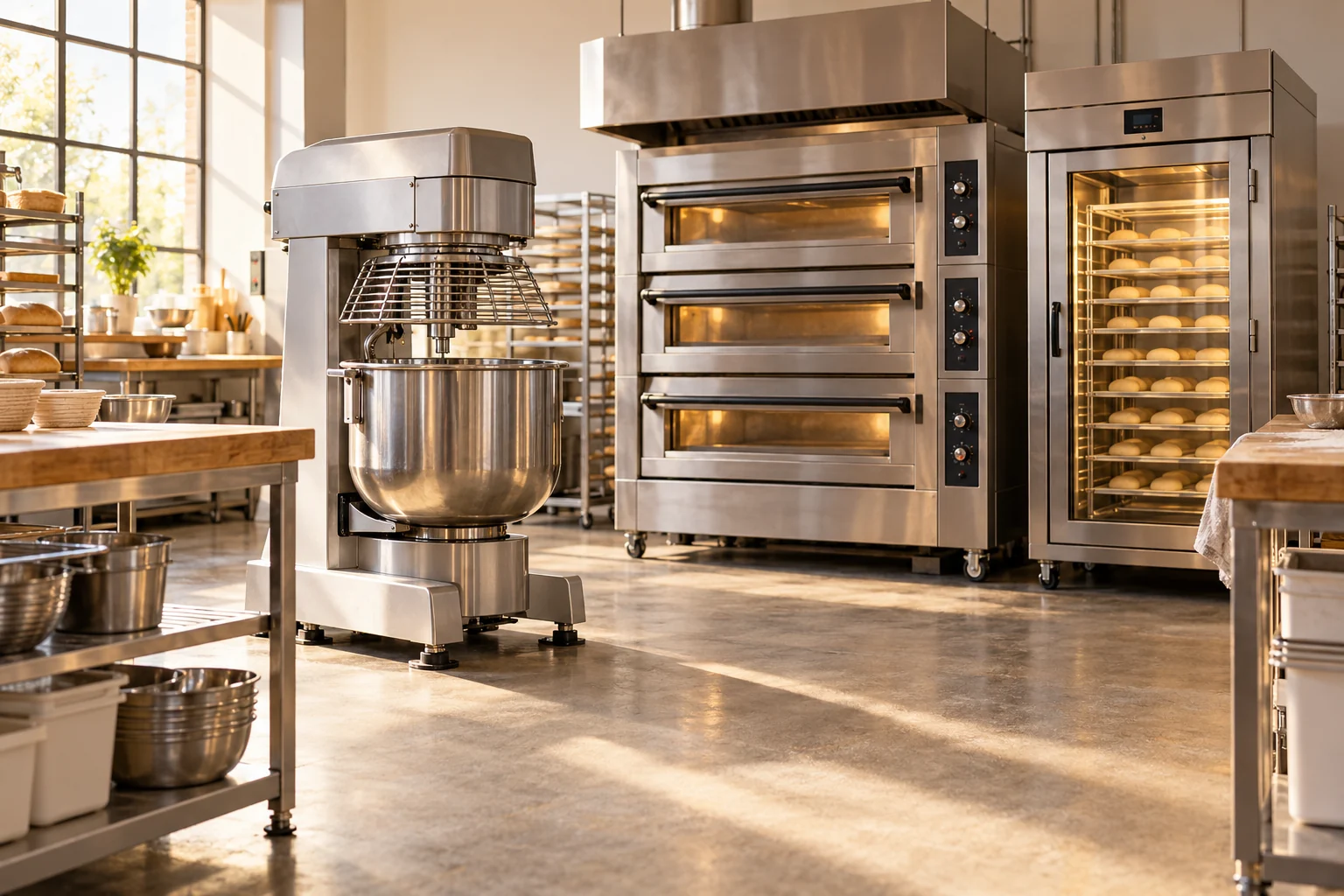
Bakery equipment financing should begin with an itemized production package: what you need to mix, form, proof, bake, cool and finish the products your business actually sells. Keep the equipment separate from premises work, opening expenses and working capital. Then compare financing proposals covering the same package and intended ownership outcome.
An oven quote alone is not a complete bakery purchase plan. The business may need supporting equipment, installation and other work before that oven becomes useful. This guide organizes the buying decision; it does not prescribe food-production methods, safe installation or compliance requirements.
Map the purchase to the production constraint
Identify why the business is buying. Is an existing machine being replaced? Is one stage limiting output? Is the bakery adding a product line or opening a location? Each situation calls for a different equipment package.
List the process stages and mark the equipment already available. Ask the supplier and qualified operational team to confirm compatibility and capacity across the intended workflow. Do not assume a larger mixer or oven increases finished output if another stage remains constrained.
Bakery Equipment's catalog separates mixers, ovens, proofing/retarding, refrigeration, packaging and other categories. That illustrates why a bakery package is more specific than a general restaurant-equipment list. It does not establish which machines your bakery needs. Bakery Equipment catalog and financing information.
For every proposed item, record the business problem it solves. Keep desirable extras separate from equipment required for the approved plan. A financing offer is not a reason to buy more machinery than the operation can use.
Build one quote map across suppliers
| Purchase stage | Information to collect |
|---|---|
| Mixing and preparation | Exact machine, included tools/accessories and agreed application |
| Forming or portioning | Required configuration and connection to the rest of the process |
| Proofing and baking | Equipment selected by qualified staff, installation scope and supporting requirements |
| Cooling, handling and storage | Racks, tables or other items actually included in the package |
| Packaging and finishing | Quoted equipment and any separate software or consumables |
| Installation and handover | Responsible parties, acceptance and training scope |
If two suppliers price different quantities or configurations, reconcile the difference before comparing monthly payments. An incomplete low quote can be more expensive once the missing equipment is added.
Have appropriate professionals assess utilities, ventilation, premises and applicable requirements. This article is not a substitute for that assessment, and equipment financing does not establish permission to operate the bakery.
Separate physical equipment from the rest of the project
Consider this invented purchase worksheet, not a price estimate:
| Assumed item | Amount |
|---|---|
| Mixer and quoted accessories | $18,000 |
| Oven package | $32,000 |
| Proofing equipment | $12,000 |
| Required racks and tables | $8,000 |
| Equipment subtotal | $70,000 |
| Separately quoted installation | $9,000 |
| Premises work | $16,000 |
| Project subtotal before other costs | $95,000 |
If a provider accepts only the $70,000 equipment subtotal, $25,000 of this illustration remains outside that financing. An upfront equipment contribution, taxes, fees or other exclusions could add to the cash needed.
Ask which related costs the actual provider can include. Bakery Equipment describes a financing relationship with Ascentium and advertises possible inclusion of tax, shipping and other costs, subject to credit parameters. Those are provider-specific statements, not proof that every bakery buyer or Dengaro request qualifies. Do not turn a seller's “100%” headline into an assumption of no cash required.
Keep ingredients, payroll, rent and operating reserves in separate planning. The equipment project being funded does not mean the business has enough cash for production and collections.
Prepare different records for new and used machines
For a new order, obtain the accepted specification, included accessories, warranty terms and delivery expectations. Identify deposits and any conditions that must be met before the order proceeds.
For a used purchase, request serial numbers, service information and an assessment by qualified specialists. Ask which work the seller will complete before acceptance and what coverage applies. Do not treat “refurbished” as a complete description of the work performed.
For both routes, record installation and acceptance responsibilities. An available machine may still need site work or supplier coordination before it can be used. Do not assume receiving an invoice and beginning production occur on the same date.
Compare the full cash path to the intended outcome
If the goal is ownership, compare offers through that outcome rather than only their regular payments. Here is a fictional arithmetic example, not a market offer:
- Offer A: $7,000 upfront plus 48 payments of $1,550, with no further purchase amount in the example: $81,400.
- Offer B: $2,000 upfront plus 48 payments of $1,350 and a stated $18,000 purchase option: $84,800.
B's regular payment is lower, but the illustrated total to own is $3,400 higher. The example does not calculate APR or compare tax treatment. Actual proposals can contain other fees and conditions.
If a purchase amount is unknown or ownership is not the intended outcome, do not force the offers into this table. Ask the provider to explain the actual structure and obtain qualified advice for contract, tax and accounting questions.
Finish the request with a realistic production plan
Submit the final equipment map, itemized supplier quotes, condition records where relevant and a separate cash budget. Explain whether the purchase replaces equipment, removes an identified constraint or supports projected growth. Keep projected sales clearly labeled rather than presenting them as guaranteed orders.
Dengaro's equipment financing requirements provide a starting point. Confirm support for the exact bakery equipment, seller, condition and related costs. No purchase amount establishes approval or terms.
A strong request connects a specific set of machines to a specific bakery need while showing how installation and operating cash will be handled outside any confirmed financing.