
Bale wrapper price: a commercial buyer’s budget guide
Compare bale wrapper prices, handling needs, seasonal utilization and complete equipment-package costs before requesting financing.
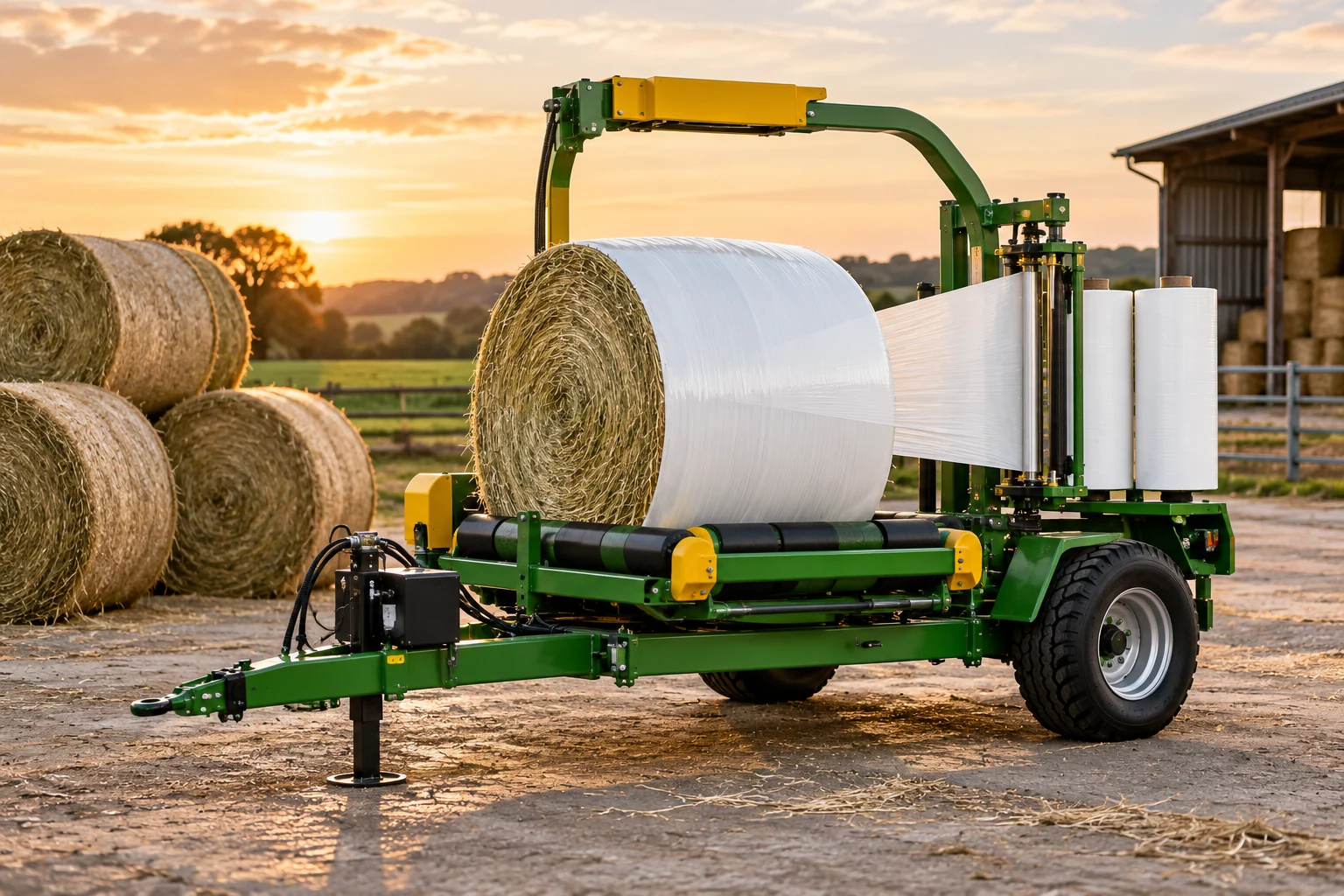
A bale wrapper price depends on the wrapping system, the bales it is intended to handle and the equipment already available in the operation. Compare single-bale and inline machines as different purchase options, then include handling, delivery, support and any genuine additional equipment required. A machine price alone does not establish the cost or suitability of the complete setup.
For dated examples, Keast Enterprises' Anderson catalog reviewed October 30, 2026 listed a 680HS single-bale wrapper at $53,500, an IFX720 inline wrapper at $68,100, and a Hybrid X inline wrapper at $73,000. These are particular advertised configurations, not a universal price range or confirmed stock. Request current quotes and exact inclusions. Keast Anderson equipment catalog.
Begin with the bale and handling plan
Describe the bales the operation expects to handle and how they will move through the system. Ask a qualified supplier to assess the appropriate configuration, compatibility and supporting equipment. Do not choose solely by a claimed maximum wrapping rate.
KUHN's manufacturer catalog separates single-bale and inline wrappers and distinguishes models for different bale formats. That demonstrates why the equipment category must be defined before comparing prices; it is not a recommendation for a particular crop or preservation method. KUHN bale-wrapper categories.
Keep agronomic decisions and operating procedures with the appropriate professionals. This guide does not prescribe moisture levels, film application, storage practices or safe machine operation.
Compare the actual work arrangement
A machine may be intended for the farm's own production, custom work or both. State which applies. For custom work, distinguish confirmed demand from a hoped-for customer list. For the farm's own use, use its actual records and a realistic season rather than an ideal maximum.
Ask how the proposed wrapper fits the available handling equipment and work locations. Identify any additional equipment needed without assuming the current tractor, loader or transport arrangement is compatible. Have qualified people confirm those questions.
Record whether the quote includes controls, accessories and transport-related equipment. The same model name can appear with different options, so ask for a configuration list rather than relying on a catalog photograph.
Use an equipment-and-season budget
| Budget section | Questions to resolve |
|---|---|
| Wrapper | Exact model, configuration and condition |
| Handling and compatibility | Which existing resources were assessed and what additional equipment is needed? |
| Delivery and handover | Included transport, setup and training scope |
| Initial supplies | What is included, and what must be bought separately? |
| Service | Who supports the machine locally and what coverage is in writing? |
| Seasonal operation | Staffing, supplies, transport and other expenses based on the operation's own plan |
Keep equipment acquisition and recurring operating expenses separate. A starter quantity of supplies is not a full-season supply agreement. An advertised throughput figure is not a forecast of completed paid work.
For used equipment, request identity, service records and a qualified condition assessment. Obtain quotes for required work before accepting a lower initial price as a saving. Do not infer remaining life from age or appearance.
A hypothetical package comparison
These figures are invented to show the structure, not to estimate current wrapper prices:
| Assumed item | Package A | Package B |
|---|---|---|
| Wrapper purchase | $40,000 | $48,000 |
| Required additional equipment | $9,000 | Included |
| Delivery and quoted preparation | $2,000 | $2,000 |
| Illustrated acquisition subtotal | $51,000 | $50,000 |
A begins $8,000 lower but totals $1,000 more under the assumptions. It still may differ in capability, condition or support. Compare those matters explicitly rather than choosing from the table alone.
If only A's $40,000 wrapper were included in a financing offer, $11,000 of the illustrated subtotal would remain outside it. Ask the actual provider how it treats related equipment and services. Do not describe an entire package as funded until the offer confirms it.
Evaluate ownership against a real service alternative
If custom wrapping service is available, obtain a written quote for the actual work and timing. Compare it with a realistic ownership budget rather than simply dividing the purchase price by one season's bale count.
For illustration only, suppose a business allocates $12,000 of annual ownership-related fixed costs to the wrapper. Across 2,000 bales, that allocation is $6 per bale; across 1,000 bales, it is $12 per bale. This is invented arithmetic, not a market custom-work rate or a complete cost per bale. Supplies, labor and other variable costs remain outside it.
The example shows why utilization assumptions matter. It does not prove buying or hiring is cheaper. Availability, timing, operational responsibility and the business's own costs still need to be assessed.
Resolve delivery and service before the season
Ask the supplier for the actual delivery expectation and identify any preparation that must occur first. Keep a target date separate from a firm commitment. Consider how the operation would respond if the machine is delayed or awaiting service, without assuming backup equipment is automatically available.
For a financing request, provide the final specification, itemized quote, condition information and the separate seasonal cash plan. Review Dengaro's equipment financing requirements and confirm support for the exact wrapper, seller, condition and related equipment. A catalog price does not establish approval or terms.
A useful bale-wrapper budget ties the machine to a defined work plan and realistic utilization. The best-looking purchase price is only useful after those questions are answered.