
Bulldozer vs front loader: choosing equipment for your business
Choose between a bulldozer and front-end wheel loader using your material flow, loading demand, project work and complete equipment purchase plan.
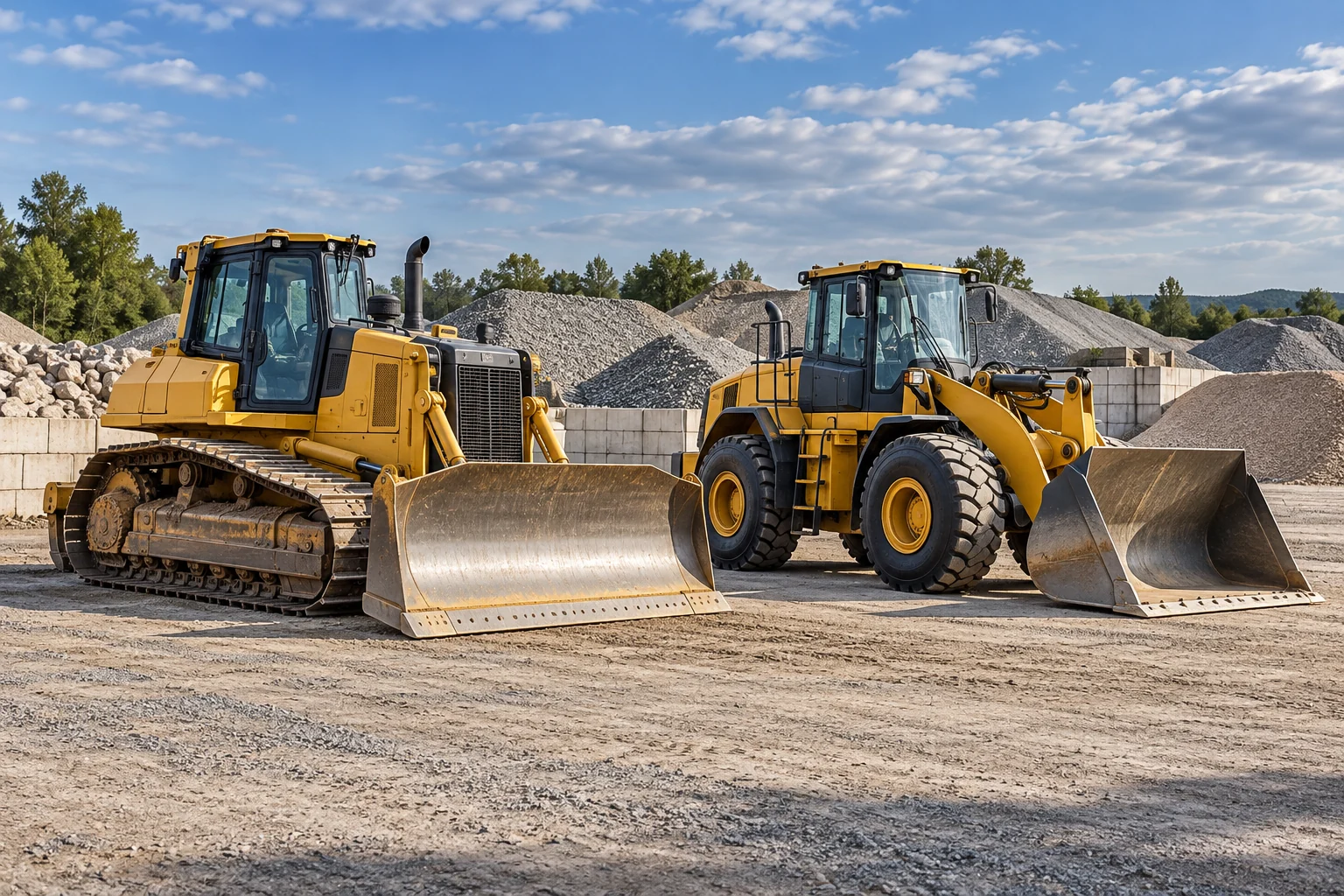
A bulldozer is primarily a pushing and grading choice; a front-end wheel loader is primarily a scooping, lifting and material-handling choice. For a business deciding what to buy, distinguish shaping the site from repeatedly moving material through a yard or into trucks. Those are different workloads, even when both machines handle dirt.
Here, “front loader” means a front-end wheel loader—not every compact loader, tractor attachment or backhoe with a front bucket. Confirm the equipment category before comparing prices or specifications.
Follow the material through your business
Cat Rentals distinguishes dozer pushing and leveling work from wheel-loader lifting, hauling and loading work. Its comparison also emphasizes that the machines can complement each other. That is a useful starting point, not a model recommendation for a particular site. (Cat Rentals dozer versus wheel loader.)
Map the steps your business repeats:
- Where does the material arrive or originate?
- Does it need to be spread or shaped across the site?
- Does it need to be gathered and loaded into another vehicle or process?
- Which step causes waiting, extra handling or outside-equipment expense?
- Does that step recur all year or only during occasional projects?
A yard that regularly loads customer trucks is asking a different question from a contractor preparing a site. The important distinction is the recurring material flow—not which machine has the more impressive specification sheet.
Compare the required job, not the attachment’s appearance
| Business activity | Question for the equipment specialist | Purchase evidence to request |
|---|---|---|
| Spreading or shaping material over a work area | Is a suitable dozer the right primary tool? | Recommended machine and blade configuration |
| Repeatedly loading trucks from stockpiles | Which loader configuration suits the handling task? | Complete machine, bucket and application assessment |
| Moving material between designated points | How does the proposed machine fit the actual site arrangement? | Application review and representative workflow evaluation |
| Mixed work in a contractor’s fleet | Which task is insufficiently covered today? | Fleet availability and the cost of outside equipment |
| Short, infrequent work outside the core business | Should it remain rented or subcontracted? | Written proposal for the same defined task |
Have qualified personnel assess ground conditions, access, capacities and operating requirements. This article does not provide travel, loading, lifting or grading instructions.
Use the dispatch record to test a loader purchase
For a material-handling business, a loader proposal should be tied to the way orders move through the operation. Collect a representative record of customer pickups, internal transfers and supplier arrivals. Note the periods when several demands occur together.
Then ask whether the equipment addresses the constraint. If a business is waiting on incoming material, adding loader capacity may not solve the delay. If trucks queue because the existing loader is occupied elsewhere, the equipment question is more specific.
Caterpillar’s loader guidance discusses wheel loaders as material-handling equipment with bucket capacity relevant to loading work. Do not translate a bucket size into guaranteed trucks served per hour. Your material, site, receiving vehicles and work process still need professional assessment. (Cat loader guidance.)
Use the project record to test a dozer purchase
A contractor considering a dozer should make a different case. Identify the site-preparation or shaping assignments currently rented out or performed with a less suitable arrangement. Record the frequency, duration and equipment availability problems.
Keep that work separate from loading demand. A dozer purchase does not automatically remove the need for a loader at a stockpile. Likewise, a loader’s ability to handle some site work does not make it a like-for-like substitute for a dozer configuration selected for a specific application.
The decision may be to own one and hire the other. That is a complete equipment plan when the remaining work and outside availability are documented.
Two budgets that answer different questions
Imagine a landscape-material yard and a site-preparation contractor. These invented examples are not market prices or equipment recommendations:
| Buyer | Proposed owned equipment | Other identified requirement | Limited total |
|---|---|---|---|
| Yard with recurring loading demand | Loader: $120,000 | One defined grading subcontract: $8,000 | $128,000 |
| Contractor with recurring dozing work | Dozer: $135,000 | Defined outside loading service: $6,000 | $141,000 |
The lower total does not prove that loaders are cheaper or better. These businesses have different tasks. The point is to build each plan around the work it must cover, then compare alternatives *within that same business and scope*.
For your own comparison, add delivery, taxes, condition-related work and applicable operating costs. Keep asset acquisition separate from recurring expenses. Do not treat a limited purchase worksheet as profit, return on investment or lifetime ownership cost.
Compare the exact units after choosing the category
Once the business case points to a machine type, request a configured offer. For used equipment, obtain a qualified inspection, service records and an inclusion list tied to the exact serial number. A loader bucket or dozer blade can change the package being compared; photographs alone do not establish what transfers.
Discuss transport and support with the relevant professionals. Do not assume a wheeled machine is automatically permitted or suitable to travel between your jobs under its own power. Obtain a proper plan rather than build the budget around that assumption.
Take the documented proposal to the next step
Review Dengaro’s equipment financing requirements when you have a specific equipment proposal. Confirm whether the provider can consider the machine, seller and intended transaction. This comparison is not a financing approval or a promise of terms.
Which is better for a material yard?
Investigate the actual loading and handling requirements first. A suitable loader may address those tasks, while grading could remain a separate service. The exact recommendation belongs with the equipment specialist reviewing your operation.
Do I need both?
Only the work record can justify that decision. Show the recurring tasks, simultaneous demands and outside-equipment alternatives before adding a second machine to the purchase plan.