
CNC machine price: a commercial buyer’s budget guide
Compare CNC milling-machine prices by configuration, tooling and options. Build a like-for-like quote comparison instead of relying on a base price.
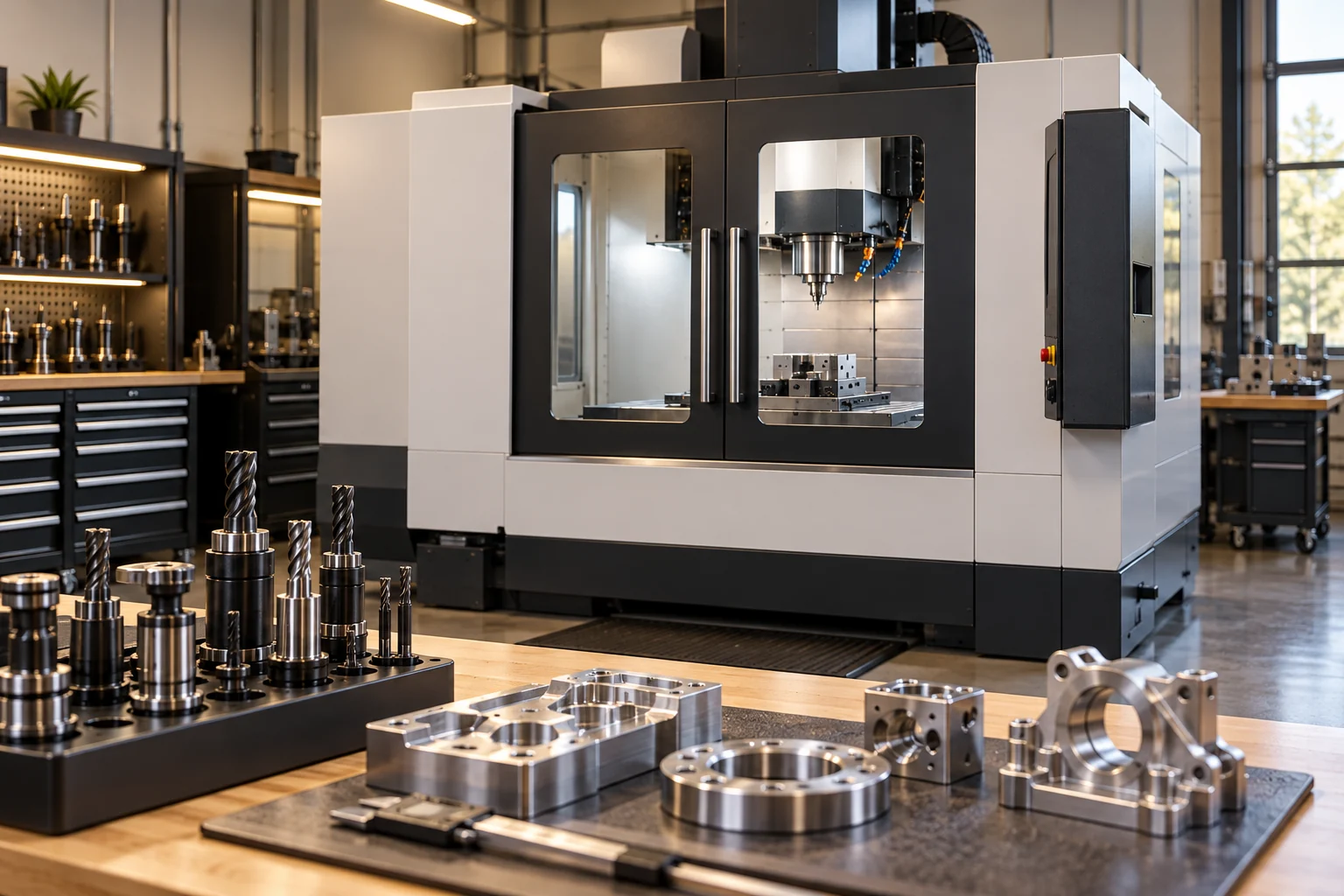
A useful CNC machine price is tied to a specific machine type, configuration and job. A base-machine listing is a starting point—not a price for an unspecified production-ready shop. Decide what the machine must make, then compare configured quotes with the same required capabilities.
This guide focuses on commercial CNC milling-machine purchases. A turning center, router or other CNC system needs its own application comparison; their prices should not be mixed into one supposed average.
Use listed prices as reference points, not a market range
Manufacturer and dealer sources retrieved for review on October 30, 2026 included these figures:
| Source and listed machine | Price shown | How to interpret it |
|---|---|---|
| Santa Cruz Electronics, Tormach 1100MX, part 39314 | $26,950 | A specific dealer listing; confirm its complete contents and final quote |
| Haas VF-2 manufacturer page | $70,995 starting price | Manufacturer starting price observed October 30, 2026; not a final delivered quote |
The Tormach dealer listing identifies an 1100MX base machine and lists kit contents. The Haas VF-2 page displayed a starting price of $70,995 when reviewed on October 30, 2026. Confirm the configured machine price and delivered cost in a written quote; the starting figure is not a stock or offer guarantee. Neither seller was contacted to confirm availability.
These are different machines, not two quotes for equivalent capability. Do not average the numbers or present them as the bottom and top of the CNC market. Ask each seller for a written quote for the configuration that meets your work.
Define the job that the price must cover
Give the machine supplier a representative part or drawing and a clear explanation of the intended work. Include the material, required features, tolerances, batch sizes and expected production pattern.
Ask the supplier to review:
- The part and fixture together, not the part dimensions alone.
- Required operations and whether the proposed configuration can perform them.
- Tooling, workholding and inspection equipment needed.
- Whether a manual setup or additional automation suits the actual work.
- Software, training and support required by your team.
- Space and utility needs to be assessed before purchase.
Do not use maximum travel numbers as the only proof that a job will fit. Have the supplier or another qualified machine-tool professional check the proposed setup and clearances.
A machine with more capacity is not automatically a better purchase. The question is whether that extra capability solves a need your business can identify.
Make each quotation show the same scope
A lower quote may simply leave out an option that another seller includes. Create a comparison sheet before deciding that one machine costs less.
| Compare | What to ask the supplier to identify |
|---|---|
| Base machine | Exact model, revision and configuration |
| Spindle and tool system | Included equipment and proposed upgrades |
| Tool changing | Included arrangement and any separately priced option |
| Workholding | Fixtures, vises or other items needed for the proposed work |
| Measurement | Probing or other equipment included in the package |
| Coolant and chip handling | Standard equipment versus additional options |
| Control and software | Included functions, licenses and separately charged items |
| Automation | What is included, what is optional and any dependencies |
| Delivery and commissioning | Written scope and responsibilities |
| Support | Warranty, training and service terms supplied with the quote |
Request both the standard configuration and the proposed additions. That lets you see the cost of a feature instead of losing it inside a package total.
Keep the comparison factual. A sales claim about faster output is not a guaranteed result for your part, tooling, operator or process. Ask what evidence or demonstration supports it for the intended application.
An options example: compare the configured totals
Here is an invented quote comparison for two machines that the buyer is still evaluating. The figures are not market prices or quotes for the models listed earlier.
| Item the buyer has requested | Quote A | Quote B |
|---|---|---|
| Base configuration | $68,000 | $73,000 |
| Required probing package | $5,000 | Included |
| Specified toolholding package | $3,500 | $3,000 |
| Delivery and commissioning | $4,000 | $3,500 |
| Subtotal before unlisted taxes or charges | $80,500 | $79,500 |
Quote A begins $5,000 lower but ends $1,000 higher once these specified items are added. That arithmetic does not establish equal performance or make Quote B the right choice. It only makes the purchase scope easier to compare.
Now mark every added feature as required for the job, useful but optional, or not justified yet. Ask the supplier to explain any dependency before removing an option. Some choices may affect other parts of the configuration.
Do not put zero beside an item that has not been quoted. Mark it “confirmation needed” so it remains visible.
Keep new and used comparisons honest
A used-machine listing needs more than a model name and asking price. Ask for the serial number, configuration, included options, available service history and disclosed issues. Have a qualified technician assess the machine and identify any work required.
Also confirm what transfers with the sale. Ask about software access, documentation, tooling, warranty and support rather than assuming every feature shown in an old brochure is present and usable.
A new-machine quote has different questions: build configuration, delivery date, training, warranty and what happens if an option changes before delivery. Compare the actual written terms rather than treating “new” as a complete description.
Keep condition and support differences beside the price. Do not turn them into invented dollar adjustments without evidence or a repair quote.
Separate purchase cost from the financing decision
First establish the equipment and work needed to complete the purchase. Then ask how you will pay for it. A monthly payment can hide different equipment packages, terms or final obligations.
For installation planning, use the specific manufacturer’s guide and qualified professionals. For example, Haas’s DM-3 pre-installation guidance addresses site preparation and utilities; it should not be treated as specifications for a different machine. Haas model-specific pre-installation guidance
If you are considering Dengaro, review its equipment financing requirements once you have a configured quote. Ask which items the provider can consider. A machine’s asking price does not establish financing eligibility or approval.
Common questions
What is an average CNC machine price?
An average across different machine types and capabilities can be misleading. Compare specific models and configurations suitable for your work, with dated quotes and clear inclusions.
Is the starting price enough for my purchase budget?
Not necessarily. Confirm options, tooling, delivery, commissioning and other charges. Do not assume a base listing includes everything your job requires.
Should I buy every available productivity option?
Ask which options are required for your intended work and which are optional. Use a job-specific demonstration or assessment rather than a general promise of higher output.
Is a used machine always the lower-cost choice?
Not automatically. Compare condition, included equipment, support and any quoted work needed before use. The asking price alone does not resolve those differences.