
CNC machinery financing: purchase planning, costs and requirements
Plan a CNC machine purchase with an itemized budget for tooling, delivery, rigging and site work. Compare what is financed and what you must pay.
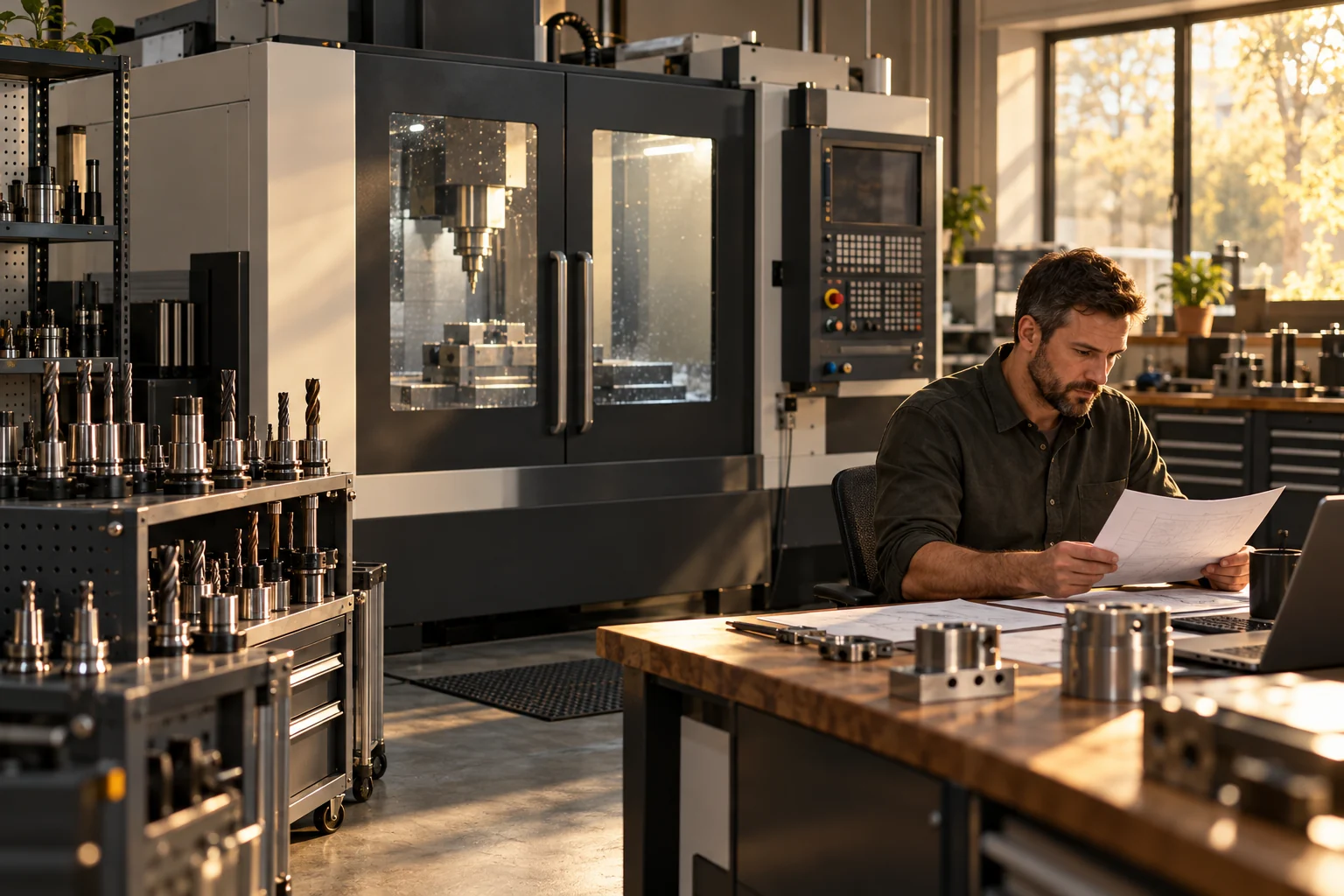
Prepare a CNC financing request around the full machine package, not just the machine’s sticker price. Separate the machine, options, tooling, delivery, rigging and site work. Then ask the provider which items its offer covers and how much cash you must supply yourself.
That gives you two useful numbers: the proposed amount financed and the money needed to get the machine into production. They may not be the same.
This guide focuses on planning a specific CNC purchase. It is not a machine-price catalog, a promise of financing, or instructions for installing industrial equipment.
Start with the parts you need to make
Before requesting a payment estimate, write down what you need the machine to do. A lower-priced machine is not a useful saving if it cannot handle the intended work.
Give the seller a short job brief:
- Materials and typical part dimensions.
- Required operations and tolerances.
- Expected batch sizes and production schedule.
- Tooling, workholding and inspection equipment you already own.
- Any automation, probing or bar-feeding needs.
- Available floor space and access for delivery.
Ask the seller to confirm the quoted configuration against that brief. List optional items separately. If the proposed configuration changes, update the financing request rather than continuing to compare payments for different machines.
Build one itemized purchase package
A CNC project can involve more than one supplier. The machine dealer might quote the machine and options, while another company handles rigging and an electrician quotes the site work.
Bring those pieces together before choosing financing.
| Cost line | What to confirm |
|---|---|
| Base machine | Exact model, configuration and new or used condition |
| Factory options | Spindle, control, probing, rotary or other quoted options |
| Tooling and workholding | What comes with the machine versus what you must add |
| Automation | Whether a feeder or robot is part of the same purchase |
| Delivery and rigging | Who handles each stage and what the written quote includes |
| Site preparation | Professional assessment of power, air, floor and access needs |
| Software and training | License terms, included training and separate charges |
| Taxes and other charges | Actual quoted amounts and who collects them |
Treat “included” as something to confirm, not an assumption. Ask who is responsible for each line and when payment is due.
For example, Haas’s published October 2026 financing terms say the stated monthly payment excludes applicable taxes, rigging and freight. The same terms distinguish some stand-alone accessories from equipment financed with a machine. Those are conditions of that specific offer—not a rule for every CNC financing program. Haas financing terms
A worked example: machine price versus project cost
Suppose a shop collects the following hypothetical quotes. These figures are made up to demonstrate a planning method, not market prices or a financing offer.
| Purchase item | Illustrative amount |
|---|---|
| Machine and selected factory options | $90,000 |
| Toolholders, workholding and starter tooling | $8,000 |
| Freight and rigging | $5,000 |
| Site preparation | $6,000 |
| Training and software setup | $3,000 |
| Subtotal before any applicable tax | $112,000 |
If an offer covers only the $90,000 machine package, the other $22,000 is not automatically funded. The buyer must ask whether any additional line can be included and plan how to pay anything excluded.
Now suppose another offer includes the tooling and freight, for a proposed $103,000 amount financed. That still leaves $9,000 of the illustrated project outside that amount, before any applicable tax or other charges.
Neither example tells you whether the provider will approve the request. It shows why two monthly payments are not comparable until you know what each one finances.
Check the site before committing to delivery
Financing the machine does not establish that your shop is ready to receive it.
Haas’s DM-3 pre-installation guide, for example, calls for checking the floor, delivery path, electrical supply and air supply. It also directs electrical connection work to an authorized electrician. These are model-specific requirements; use the current guide for the exact machine and qualified professionals, not another model’s specifications. Haas DM-3 pre-installation guide
Ask the seller and installers to help you answer three planning questions:
- Can the machine reach its final position? Confirm access and the delivery plan with the rigging professional.
- What must be ready before it arrives? Get written scope and timing for site work.
- What establishes completion? Agree how installation, testing and training will be documented.
Do not rely on a general financing article for lifting, electrical or structural instructions. A professional’s written site assessment is also more useful for your budget than a guessed allowance.
Prepare different records for new and used machines
For a new machine, request the complete configuration, included options, warranty information, delivery estimate and payment milestones. Ask whether a deposit is required before manufacture or shipment, and how it is treated if financing is not completed.
For a used machine, add the serial number, age, included accessories and available service records. Consider an independent inspection by a qualified machine-tool technician. Ask the seller which software, tooling and other items are included and whether their transfer can be documented.
Keep the inspection decision separate from the financing decision. Approval of a purchase does not replace a technical assessment of the machine.
Give the financing provider the actual seller information and itemized quote. Ask what additional records it needs for that asset and transaction. Do not assume a program accepts every machine age, seller or condition.
Compare the agreement—not only its monthly payment
Ask each provider to quote the same package. If one offer excludes tooling or freight, show those amounts separately in your comparison.
Record the amount financed, cash due, payment frequency, number of payments, fees, early-payoff terms and any final payment. If you are comparing a loan with a lease, ask what happens to ownership at the end and what any purchase option would cost. Read the actual agreement rather than inferring its terms from the product name.
Then check timing. When is your deposit due? When does the seller expect the balance? When do payments begin? What happens if delivery or installation is delayed? Ask for answers before assuming that production will start before the first payment.
Your next step
Put the machine quote, separate supplier quotes and site assessment in one file. Mark every line as included in the proposed financing, excluded, or awaiting confirmation.
If you are considering Dengaro, review its equipment financing requirements. Ask whether the specific machine, seller and additional costs fit an available provider’s program. This guide does not confirm eligibility or approval.
Common questions
Can CNC financing include tooling and installation?
It depends on the provider and agreement. Itemize these costs and request written confirmation. Do not assume that a machine-only payment estimate includes them.
Can I finance a used CNC machine?
Ask the provider about the exact machine, condition and seller. Prepare the quote and identifying details, and keep the technical inspection separate from credit approval.
Should I finish site preparation before applying?
You can gather quotes and professional assessments before committing to the work. Coordinate the purchase, financing conditions and installation plan so you understand which costs may become nonrefundable.