
Commercial fishing boat financing: costs, terms and questions to ask
Compare commercial fishing vessel financing by transaction fit, condition records, project cash needs and seasonal payment terms before committing.
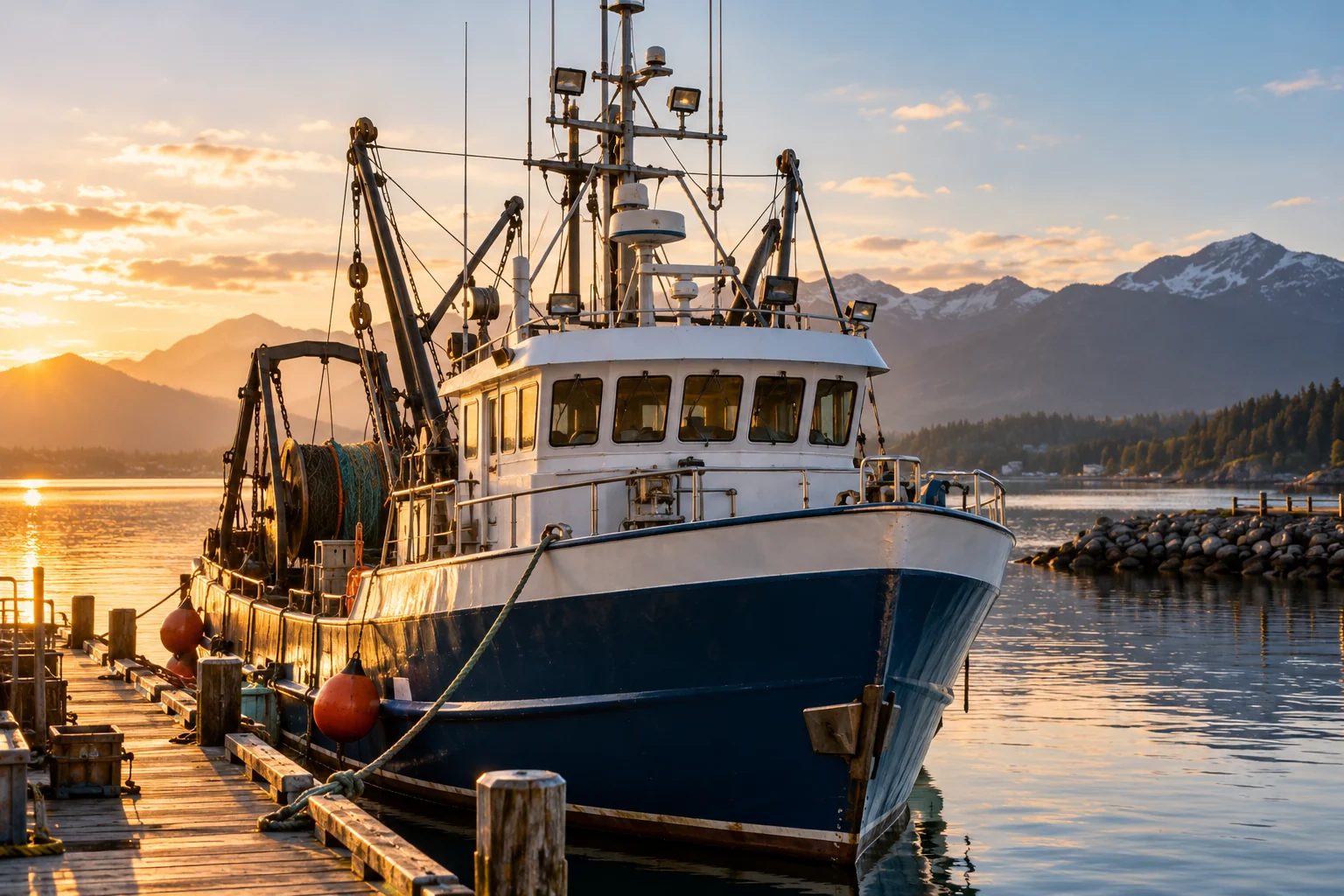
Commercial fishing boat financing starts with two separate checks: whether the lender supports your exact vessel transaction, and whether the business can carry the payment schedule through its operating season. A recreational boat loan advertisement does not answer either question.
Before comparing rates, identify what you are buying: an existing vessel, a replacement engine, onboard machinery, a refit or a larger package. Keep fishing rights, operating cash and other non-vessel costs separate. Ask the proposed provider which parts it can consider and which need another funding source.
Match the financing route to the project
Different programs cover different transactions. NOAA's Fisheries Finance Program describes financing for purchasing, refurbishing or modernizing existing fishing vessels and other qualifying fisheries assets. It specifically excludes vessel-refurbishing projects that materially increase harvesting capacity. Contact the program about the actual proposal rather than assuming any commercial boat purchase fits. NOAA Fisheries Finance Program
Commercial lenders may offer different structures. For example, First National Bank in Maine lists new and used vessel packages, construction lines and seasonal payment options on its commercial fishing page. These are that bank's stated options, not universal terms or a Dengaro offer. Geographic and borrower eligibility still need confirmation. First National Bank commercial fishing loans
Those examples suggest a useful first conversation:
- Does the provider finance commercial fishing in our location and operation type?
- Does it support this vessel's age, condition, seller and proposed use?
- Is this a purchase agreement, construction project, refit or equipment-only request?
- Which costs are eligible, and which are excluded?
- What must be complete before funding can occur?
A clear answer here can save time preparing an application for the wrong program.
Build a vessel-and-machinery file
Treat the boat as a specific asset, not a generic purchase amount. Prepare the seller's written description, identifying information, inventory and price. Separate equipment included in the sale from items the seller will remove or charge for separately.
Ask the prospective lender and insurer what inspections, surveys, valuation and records they require. Have qualified marine professionals assess condition and suitability. A lender's acceptance of collateral is not your own technical assessment of whether the vessel is fit for the intended work.
Use this purchasing file to track unanswered questions:
| Item | Question to resolve |
|---|---|
| Vessel identity and ownership | Do the seller, records and proposed agreement describe the same asset? |
| Engine and onboard machinery | What is included, and which records or inspections are available? |
| Condition findings | Which work is needed, who will quote it and who pays? |
| Included inventory | Are gear, electronics and other items listed individually? |
| Delivery and acceptance | Where does handover occur, and what must be completed first? |
| Insurance | What coverage and timing do the insurer and lender require? |
| Rights and permissions | Which matters need separate confirmation by the relevant authority or adviser? |
Have an appropriate professional review ownership, liens, documentation and contract conditions. This article is a budgeting guide, not a determination of legal title or fishing rights.
Separate purchase cost from the first-season budget
A vessel purchase can be financeable while the rest of the plan is underfunded. Do not hide that gap by putting everything into one line labeled “boat.”
Consider this hypothetical worksheet, not a market price or financing offer:
| Assumed cost | Amount |
|---|---|
| Vessel and listed machinery | $240,000 |
| Separately quoted repair work | $25,000 |
| Survey, closing and delivery allowance | $10,000 |
| Initial operating reserve | $30,000 |
| Total planning need | $305,000 |
Suppose the proposed financing covers $190,000 of the vessel purchase and no other lines. The business still needs $115,000 from other confirmed sources: $50,000 toward the vessel and $65,000 for the remaining items.
These invented figures demonstrate the gap; they do not predict a down payment. Your actual lender decides the eligible costs and proposed advance. Replace allowances with written quotes wherever possible and show the remaining uncertainty openly.
Test the payment dates against the fishing season
Annual revenue alone can hide a cash shortage in a quiet month. Build a month-by-month plan showing expected receipts, operating expenses and proposed debt payments. Use your business records and a conservative scenario rather than assuming every trip or sale goes as planned.
If a lender offers seasonal payments, ask for the exact schedule in writing. “Seasonal” does not tell you whether payments are reduced, deferred, interest-only or followed by a larger payment. Ask how interest accrues during any reduced-payment period and what the total repayment would be.
Stress-test a delay before signing. If the vessel needs more work or the season starts later than expected, which payments still fall due? How much cash remains after insurance, essential upkeep and other committed costs?
The point is not to forecast fishing results from a blog. It is to make the payment obligations visible so your finance team can compare them with the operation's own assumptions.
Compare the contract, not only the rate
Ask each provider for a written proposal that identifies:
- Amount financed and cash due before funding.
- Fixed or variable pricing and any adjustment terms.
- Number, amount and timing of payments.
- Fees, documentation costs and required insurance.
- Any balloon, final payment or residual obligation.
- Early-payoff terms and how to obtain a payoff figure.
- Security and guarantee requirements for professional review.
- Funding conditions and the offer's expiry date.
For a repair or construction project, add the draw schedule. Who approves each milestone? What happens if work exceeds budget? Is funding available before the invoice must be paid? A promised completion date from a yard is not the same as an unconditional funding commitment.
Do not sign a nonrefundable purchase commitment solely because an advertisement says commercial boats can be financed. Confirm both transaction fit and the conditions of the actual offer.
Keep permit and operating questions out of the equipment assumption
Ask the relevant authorities and advisers to confirm what rights, permissions and documentation your operation needs. Do not assume they transfer with the vessel or become valid because financing was approved.
Likewise, a proposal for equipment does not automatically include working capital, permits or quota. List those separately and ask the provider about each one. The narrower and clearer the request, the easier it is to see what remains unfunded.
Can Dengaro help with this purchase?
Commercial fishing vessels are a specialty category. Review Dengaro's equipment-financing requirements, then ask whether your exact vessel, machinery, seller, condition and business fit available options. General equipment-financing information does not establish marine eligibility.
If you start a Dengaro enquiry, describe the commercial use and attach the itemized proposal when requested. Ask about specialty fit before relying on a payment estimate. Approval, eligible costs, rates and funding dates depend on provider review.
Common questions
Can a used commercial fishing boat be financed?
Some providers expressly offer used-vessel financing, but that does not establish eligibility for every vessel. Ask about condition, age, valuation, inspection and documentation requirements for the specific transaction.
Is a seasonal payment plan automatically cheaper?
No. Compare the actual payment schedule, fees, interest treatment and total repayment. A structure that helps with timing can still cost more overall.
What should be ready before comparing offers?
An itemized purchase scope, the condition information requested by the provider, a separate project budget and a cash-flow plan that shows when payments can be supported. Keep unresolved technical or legal questions with qualified professionals.