
Cost to start a landscaping business: equipment, setup and cash reserves
Build a landscaping startup budget that separates equipment, launch spending, operating cash and owner needs without mistaking financing for a full plan.
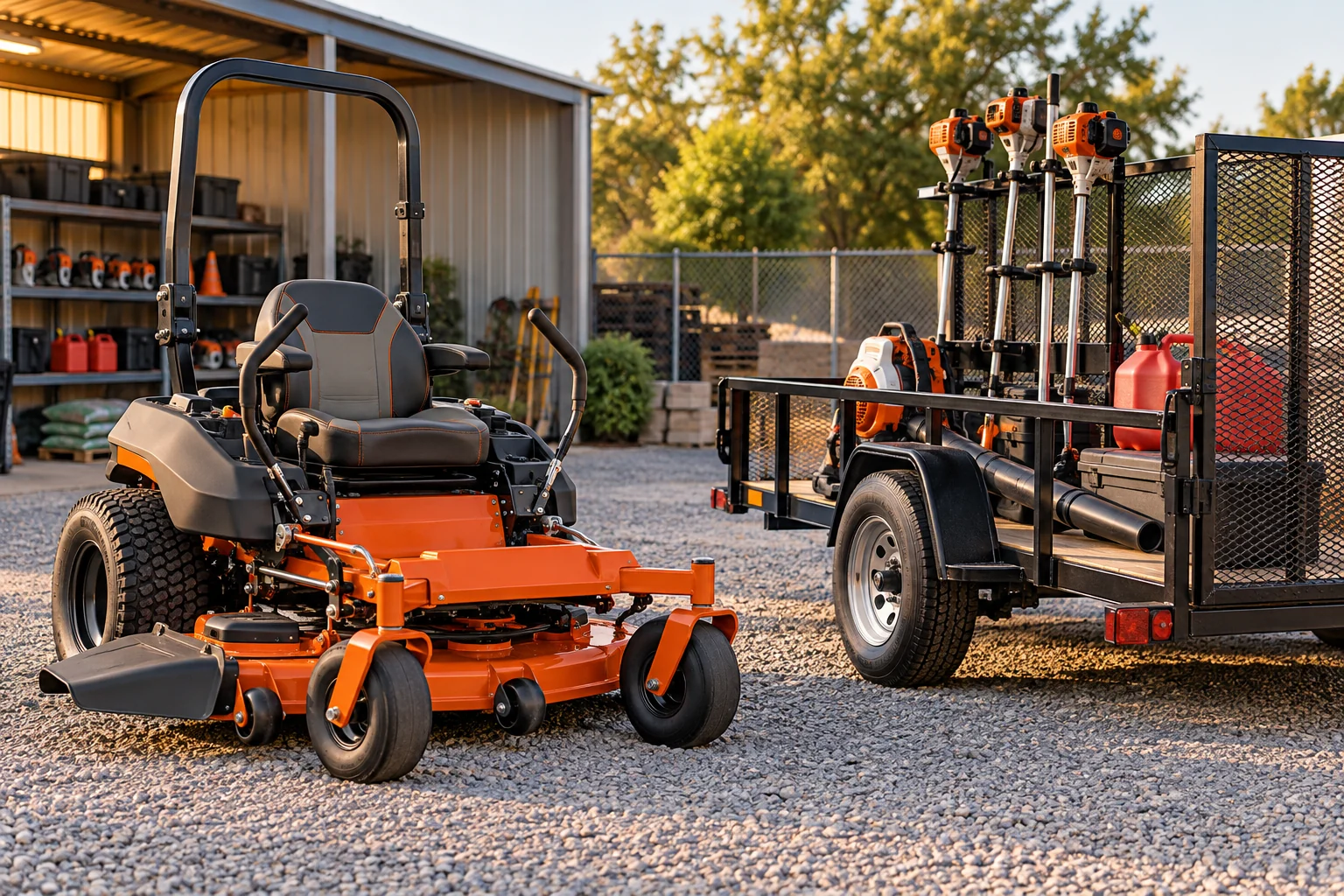
The cost to start a landscaping business depends on what you will sell, what you already own and how long you must pay expenses before customer money arrives. Build the budget in three parts: equipment, one-time launch costs and operating cash. A mower-and-trailer quote is only the equipment portion—not the full cost of opening the business.
A lawn-maintenance route, an installation crew and a tree-work business are different businesses with different equipment and training needs. This guide uses a small lawn-maintenance operation as a planning example. It is not a national average or a recommendation to offer services you are not trained or authorized to perform.
Write the first service offer before buying equipment
Start with the work you expect to do in the first season. For example: recurring mowing, edging and cleanup for a defined service area. Then list the equipment required to perform that work safely and reliably.
Avoid building the first shopping list around services you might offer someday. A machine for an occasional project may need a rental comparison rather than an immediate purchase. For specialized work, establish the required skills, insurance and local permissions before promising it to customers.
Use three columns:
| Need now | Already available | Add only after a clear business case |
|---|---|---|
| Equipment needed for the initial service | Suitable business-owned tools and transport | Equipment for a separate future service |
| Safety equipment and training | Existing storage that can lawfully be used | Extra capacity without confirmed work |
| Reliable way to reach customers | Existing administrative tools | A second crew's full package |
The table is a decision aid, not a universal equipment prescription. Have suppliers and qualified advisers confirm suitability for your actual work.
Separate purchases from the bills that keep coming
The U.S. Small Business Administration distinguishes one-time startup expenses from ongoing expenses and recommends putting them into a formal cost report. That distinction is particularly useful when an equipment purchase makes the launch look simpler than it is. Source: SBA business planning guidance.
Your budget can include four working sections:
Equipment: mowers, handheld tools, trailer and any other documented business assets. List existing equipment separately rather than counting it as cash you must spend again.
Launch setup: registration, professional advice, initial marketing, systems and any one-time deposits or setup charges. Obtain actual local quotes instead of treating an internet estimate as a fee schedule.
Operating cash: fuel, wages where applicable, storage, insurance payments, maintenance, software and other bills paid while the business is operating.
Owner needs: money the owner must take out for personal living costs. Keep this visible in cash planning but separate from a vendor equipment invoice.
The SBA also notes that expenses such as insurance, wages, rent and government fees vary by location. Check your own state and local requirements rather than borrowing another operator's costs. Source: SBA launch guidance.
Build a launch budget you can explain
Below is an invented example for practicing the structure. It is not a quote, recommended equipment mix, typical startup cost or promise of financing. The example assumes the business already has suitable transport; if it does not, the transport purchase and operating costs must be added.
| Budget line | Illustrative amount |
|---|---|
| Commercial mower | $9,000 |
| Handheld equipment and accessories | $3,000 |
| Trailer | $5,000 |
| Equipment subtotal | $17,000 |
| One-time setup and launch spending | $2,500 |
| Planned operating cash before collections | $6,000 |
| Planned owner living-cash buffer | $3,000 |
| Total cash-and-purchase plan | $28,500 |
The $17,000 equipment subtotal is not the same as the $28,500 launch plan. If a provider accepted and financed the entire illustrated equipment subtotal, the remaining $11,500 would still need another source. In a real offer, required upfront equipment cash and excluded charges could increase that amount.
This is why “I found financing for the mower” does not answer “Do I have enough money to open?”
Test the collection delay, not just the sales target
Draw a weekly cash timeline from the first bill through the first expected customer payment. Put expenses on the dates they are due and customer receipts on the dates you reasonably expect to receive them—not the day you hope to book the work.
For another hypothetical exercise, suppose the business starts with $6,000 of operating cash and pays $1,500 each week before collecting anything. After three weeks it has $1,500 left; after four it has used the full $6,000. This ignores any additional costs and is not a recommended reserve level. It simply makes the effect of delayed collections visible.
Run a slower-start case. What changes if customers sign up later, weather postpones work, or equipment needs attention? Ask what costs can be delayed without compromising safety, contractual obligations or the ability to serve existing customers.
Do not count an unapproved loan, a customer inquiry or an unsigned proposal as available cash. Track each as uncertain until the relevant commitment is established.
Get equipment quotes with a clear scope
For each proposed purchase, ask for the model, included attachments or accessories, condition, warranty, delivery charges and any taxes or setup costs. If buying used, obtain condition records and a qualified inspection where appropriate.
Keep consumables, routine operating expenses and the owner buffer separate. Ask the financing provider which quoted lines it supports rather than assuming every startup expense can be included.
If you are considering Dengaro for a genuine business equipment package, review the equipment financing requirements. The page does not establish startup eligibility or approval for your particular equipment, seller or company. Confirm those details before relying on funding or placing a nonrefundable order.
There is no reason to buy unnecessary equipment simply to reach a minimum request. A smaller start, a different funding route or waiting may fit the actual business better; compare the consequences with your advisers.
Know what would change the budget
Before committing, write down the assumptions most likely to move:
- The initial service area and travel time between jobs.
- Whether the owner works alone or hires help.
- Actual storage, insurance and vehicle arrangements.
- Which tools are already suitable and available.
- The payment terms offered to customers.
- Seasonal interruptions and the expected start date.
Give each assumption an owner and a next step: obtain a quote, check a requirement, confirm an existing asset or revise the service plan. A budget full of labeled unknowns is more useful than a confident total built on guesses.
Questions before launch
Can equipment financing cover the whole startup budget?
Do not assume so. Equipment, operating cash and personal living costs are different needs. Ask the provider what it supports and plan separately for everything outside the offer.
Should I buy equipment for every service immediately?
Build the purchase list around the work you are prepared to deliver and have a credible plan to sell. Evaluate additional services separately instead of hiding their costs inside the initial package.
What number should I save first?
Save the itemized budget, not just its total. With each expense, record the amount, timing, source of the estimate and whether it is confirmed. Those details show what must be resolved before opening day.