
DNA sequencer cost: a commercial buyer’s budget guide
Separate DNA sequencer acquisition costs from sequencing-service prices, recurring supplies and support-lifecycle risks in a commercial lab budget.
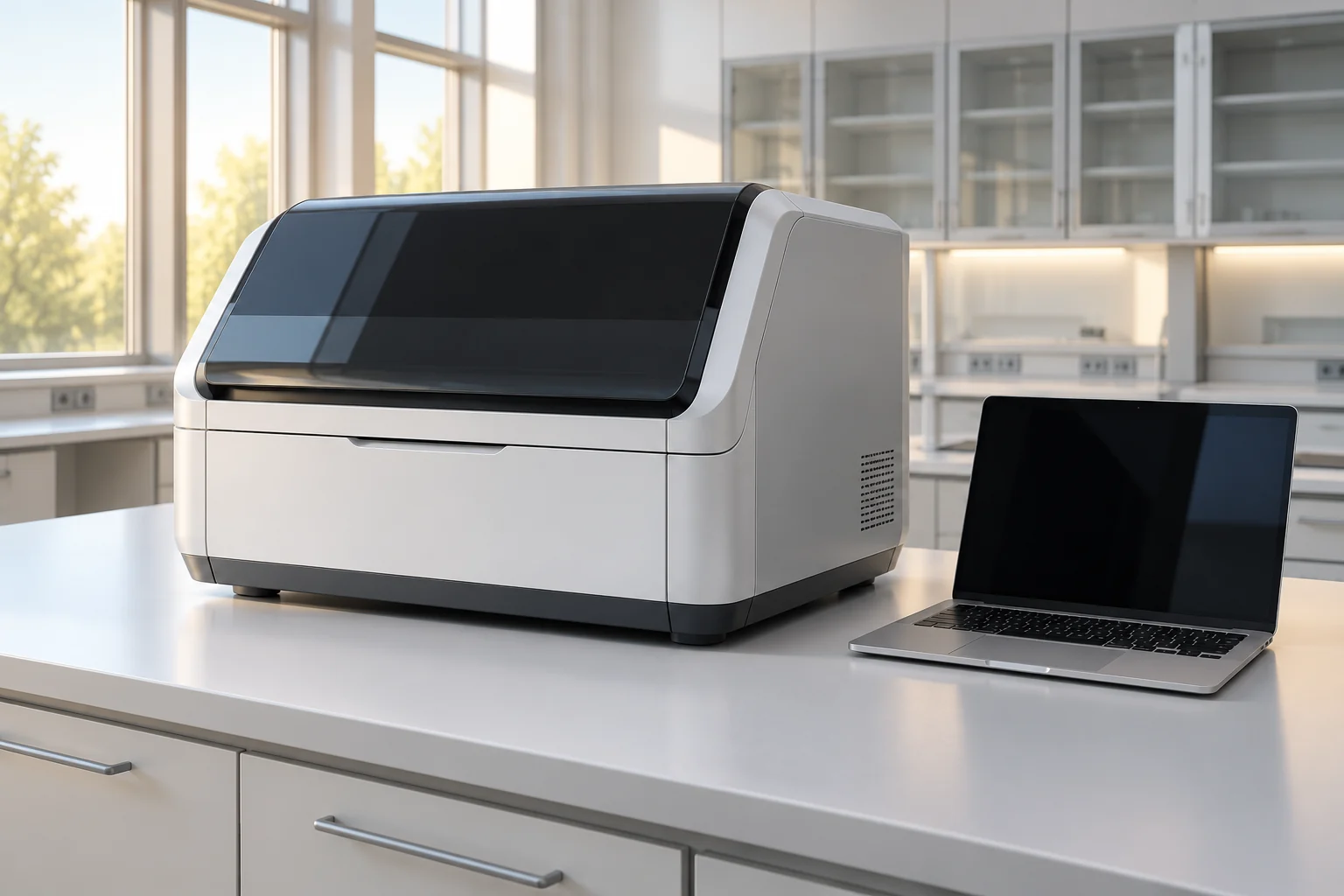
DNA sequencer cost is not the same as the cost of a DNA test or sequencing service. A laboratory purchase needs an instrument-specific quote plus the computing, supplies, support and other equipment required for its approved research work. A portable device price should not become the budget for a complete laboratory workflow.
For a dated reference, Oxford Nanopore's U.S. list displayed a MinION Mk1D device at $3,150 and a MinION Mk1D Pack at $5,150 when reviewed on October 30, 2026. The same list showed GridION and PromethION 24 prices on request. These are distinct manufacturer offerings, not a general market range or proof that one device can substitute for another. Confirm current contents, regional terms and final charges with the supplier. Oxford Nanopore U.S. price list
This guide is for commercial research-equipment procurement. It does not recommend an instrument for diagnosis, describe biological procedures or establish clinical authorization. Qualified scientific and compliance personnel must decide whether a proposed system is suitable for the intended work.
Keep three different cost questions apart
Before comparing numbers, identify what the number measures:
| Cost question | What it can tell a buyer |
|---|---|
| Instrument purchase price | The quoted hardware and explicitly included package |
| Laboratory ownership cost | Acquisition plus support, staff, computing and other ongoing requirements |
| Cost per sample or project | A workload-dependent calculation or a service provider's defined charge |
NHGRI explains that its cost-per-genome chart is an estimate for sequencing a human-sized genome, rather than the actual cost of a particular project. It is not a supplier's instrument price list. Do not use a falling cost-per-genome graph as the amount needed to purchase equipment. NHGRI sequencing cost data
Similarly, a service quote can include work and expertise your laboratory would need to provide if it brought the activity in-house. Compare the scope, not just the headline amount.
Let the research requirement define the package
Have the laboratory's qualified team write the required output, expected workload, quality criteria and acceptance process before requesting prices. Purchasing staff can then ask suppliers to quote against that brief without choosing a scientific platform from marketing claims.
Illumina's ownership-cost guidance identifies expenses beyond the instrument, including ancillary equipment, data analysis and storage, training and support. These are useful budget categories, not a statement that every laboratory needs the same equipment or software. Illumina cost planning
Ask which elements are included in the instrument package and which are separate purchases. If a demonstration uses a different computing system or paid software tier, record that difference. A successful demonstration is useful only if the quoted package can be assessed against the same approved requirements.
Build two budgets instead of one
The first budget is the acquisition project. The second is the recurring cost of running the planned work. Keeping them separate prevents consumable spending from disappearing inside a hardware figure.
For the acquisition table, request line items for the instrument, supporting equipment, computing, initial software, delivery, training and any required commissioning services. Have qualified personnel assess facility changes separately.
For the recurring table, request current supplier quotes and laboratory estimates for consumables, service, software renewals, storage, staff time and other relevant expenses. Document whether any introductory allowance expires and whether the contract imposes purchase commitments.
Do not assume consumables are interchangeable between instruments. Compatibility and scientific suitability belong with the laboratory's qualified team. The purchasing task is to record what that team specifies and obtain comparable written commercial terms.
A fictional acquisition worksheet
These figures are invented budget assumptions, not prices for any named manufacturer or a recommended laboratory configuration.
| Assumed item | Amount |
|---|---|
| Defined instrument package | $60,000 |
| Approved supporting equipment | $15,000 |
| Computing and initial software | $8,000 |
| Delivery, training and commissioning | $7,000 |
| Acquisition total | $90,000 |
If a finance proposal considers only $75,000 of instrument and supporting equipment, $15,000 remains outside that amount. Obtain written treatment of software and services; do not assume all project costs are eligible.
A small standalone purchase may be below a provider's minimum transaction size. Do not invent a larger package or add unrelated equipment simply to make it fit. The package should reflect a genuine approved business requirement.
Evaluate workload without confusing capacity and demand
Suppose a fictional cost allocation assigns $24,000 of annual fixed ownership expenses to a research service. At 1,200 accepted projects, the allocation is $20 each. At 600, it is $40 each, before project-specific supplies, labor and other variable costs.
Those numbers are not sequencing prices, expected yields or recommended workloads. They illustrate how lower utilization changes the business case. Have qualified staff establish what constitutes an accepted project and which resources it requires.
Compare ownership with actual external-service proposals for the same deliverables. Include the internal review and coordination work that remains under either option. Do not assume a supplier's maximum instrument capacity equals the volume of work your laboratory can sell or complete.
Check lifecycle dates before buying used
Low used-equipment prices deserve a support review before a financial comparison. Illumina's published notice for MiSeq RUO, MiniSeq and iSeq 100 instruments states an instrument end-of-sale date of September 30, 2025 and final end of life of December 31, 2029. It also sets restrictions on service-contract renewal and cautions that replacement-part availability is not guaranteed. Confirm how the notice applies to a particular unit and region. Illumina lifecycle notice
This is why an older launch price or surviving order page should not be presented as a current supported purchase offer. Ask the manufacturer to confirm the serial number's support status, relevant transfer conditions and remaining consumable availability in writing.
For any used candidate, collect a condition assessment, included accessories, documentation and a written acceptance plan. Have qualified specialists decide whether the purchase makes sense for the intended research work. A functioning power-on test alone is not a complete procurement review.
Questions to settle before approval
Does a low device price mean low total laboratory cost?
No. Compare the full approved configuration and recurring requirements. A device-only price and an integrated system quotation may cover very different scopes.
Can a research instrument be used for clinical work?
This purchasing guide does not establish that. Instrument selection, intended-use restrictions and applicable clinical requirements need qualified scientific, clinical and compliance review before any such use.
Can specialty laboratory equipment be financed?
Ask the provider to review the exact asset, seller, condition and transaction. General equipment-financing information does not establish specialty eligibility or approval.
Request financing only for a defined purchase
Once the laboratory has approved a configuration and obtained an itemized quote, review Dengaro's equipment-financing requirements. If you start an enquiry, confirm specialty-equipment eligibility before relying on any financing assumptions. Terms and eligible costs remain subject to provider review.
Sources
- https://store.nanoporetech.com/us/priceList.html
- https://www.genome.gov/about-genomics/fact-sheets/DNA-Sequencing-Costs-Data
- https://supportassets.illumina.com/science/technology/next-generation-sequencing/beginners/ngs-cost.html
- https://knowledge.illumina.com/instrumentation/general/instrumentation-general-reference_material-list/000009536