
DNA synthesizer price: a commercial buyer’s budget guide
A usable DNA synthesizer price must identify the exact instrument, country of sale, included accessories and ongoing commercial commitments.
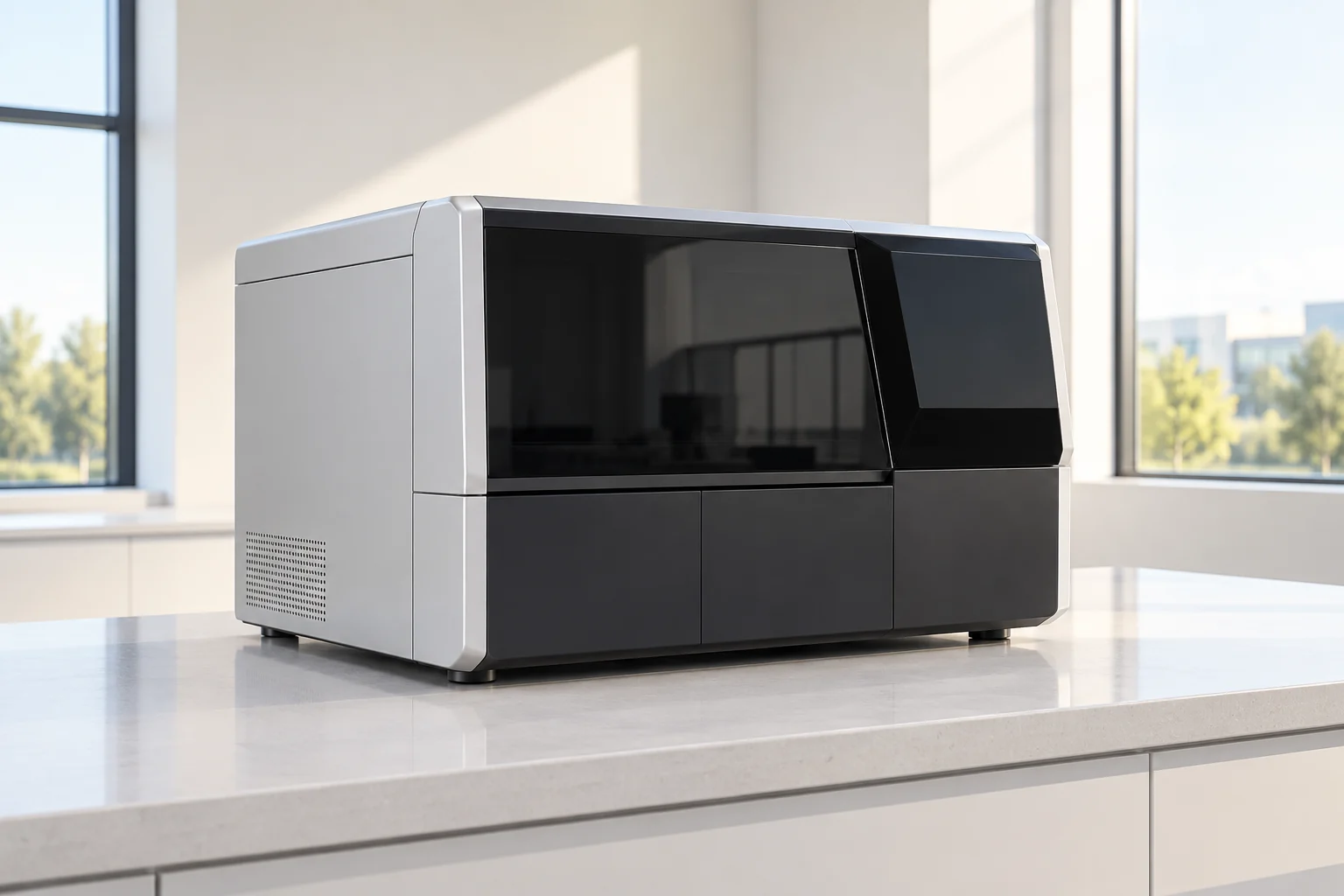
A usable DNA synthesizer price must identify the exact instrument, country of sale, included accessories and ongoing commercial commitments. The manufacturer shop reviewed for this guide did not expose a single US dollar equipment price without country selection, so it would be misleading to invent a market range from it.
For a laboratory buyer, the practical next step is an itemized supplier quote that separates the instrument from installation, support and recurring supplies. Compare those costs over the same purchasing period. Do not substitute the price of a DNA sequencer or another laboratory platform: it is a different procurement question.
This guide stays at the business-purchasing level. It does not provide synthesis methods, biological design, experimental instructions or advice on clinical use.
What the available manufacturer evidence supports
Kilobaser's shop, reviewed on October 30, 2026, lists a One DNA Synthesizer and a One-XT DNA/RNA Synthesizer as separate products. It also lists accessories and consumable categories separately. The retrieved page displayed country-selection prompts rather than a US dollar price for those instruments. Kilobaser manufacturer shop.
That supports a narrow conclusion: a buyer needs a location-specific, model-specific quote. It does not prove that every manufacturer uses the same sales process or that no public price exists elsewhere. It also does not justify treating an accessory price as the cost of a complete instrument package.
When requesting a quote, state the purchasing organization and delivery location. Have the laboratory's qualified team define the appropriate equipment category. Keep the commercial discussion separate from technical approval and institutional oversight.
Request a quote that can be compared
A quote should tell purchasing staff what they receive, what they must buy separately and which obligations continue after delivery.
| Quote section | Information to obtain |
|---|---|
| Instrument | Exact model, new or used condition, included hardware and software |
| Accessories | Required versus optional items, separately priced |
| Delivery and installation | Scope, responsible party and charges |
| Support | Warranty, service options, exclusions and renewal terms |
| Recurring purchases | Commercial supply commitments and pricing basis |
| Training | Included scope, audience and additional charges |
| Institutional requirements | Supplier documentation requested by your own compliance team |
Avoid comparing a bare instrument with a package containing several years of support. Ask suppliers to show a consistent baseline first, then list optional additions underneath it.
If a price is quoted in another currency, keep the original currency and quote date visible. Ask your purchasing team how conversion, shipping, taxes and import arrangements will be handled rather than silently turning a foreign listing into a US delivered price.
Separate capital cost from recurring spend
The equipment invoice is not the same as the cost of owning and supporting the platform. Create separate columns for one-time purchases and recurring obligations.
Here is a fictional procurement worksheet. These numbers are invented solely to demonstrate budgeting; they are not synthesizer market prices or supplier estimates.
| Budget line | Illustrative amount |
|---|---|
| Instrument package | $60,000 |
| Delivery and installation | $4,000 |
| First-year support | $6,000 |
| Initial commercial supplies budget | $5,000 |
| Illustrative first-year project total | $75,000 |
If a provider funds $64,000 of the equipment and installation package, the other $11,000 needs another funding source. Do not assume support or recurring supplies are eligible for equipment financing.
The example excludes ordinary laboratory payroll, facility costs, taxes and any work required by the institution. It does not estimate output, cost per sequence or scientific performance. Those questions require a separate assessment by the qualified laboratory team.
Compare ownership with an outside-service arrangement
A purchasing decision can include both equipment acquisition and the alternative of using an established outside service. Compare them against the institution's legitimate, approved work and purchasing policies, not against a theoretical maximum output.
The commercial comparison can ask:
- Which costs occur regardless of actual use?
- Which costs vary with orders or approved demand?
- Who provides support if the equipment is unavailable?
- What contractual commitments continue if the project changes?
- What documentation and oversight does the institution require for each route?
Do not assume in-house ownership is automatically cheaper or faster. Nor should an outside-service quote be compared with only the machine's purchase price. Use the same time horizon and include the relevant commercial costs on both sides.
Keep sensitive project details out of general financing correspondence. Describe the business asset and procurement purpose without unnecessarily sharing proprietary research or personal information.
Put institutional review ahead of the deposit
Equipment funding is not a substitute for the laboratory's own safety, legal, compliance or scientific review. Have the appropriate institutional personnel approve the purchase and the intended use before committing to a nonrefundable order.
Ask the supplier for the documentation your organization requires. If that review identifies restrictions or unresolved issues, keep the purchase on hold rather than trying to solve them through a financing contract.
A lender's willingness to consider an asset says nothing about whether a particular activity is authorized. The commercial and institutional approvals should be documented separately, with clear responsibility for each.
Check support and transferability on used equipment
For a used instrument, request the serial number, condition records, included hardware, software license terms and available manufacturer or qualified service support. Ask whether installation and training remain available for that exact unit.
Do not assume a license or service entitlement transfers because the machine changes owners. Get written confirmation from the relevant provider. Also establish whether a warranty is supplied by the original manufacturer, the reseller or no one.
Have qualified personnel assess technical suitability and condition. This guide does not describe how to inspect, test or operate the system. The purchasing file should contain the outcome of the appropriate review, not a buyer's guess based on photographs.
Common purchasing questions
Why isn't there a single price range here?
The reviewed primary shop did not provide a location-specific US equipment price in its retrieved page. A fabricated range would be less useful than an honest quote checklist and a clearly labeled budgeting example.
Is a DNA sequencer price a useful substitute?
No. Keep the equipment categories and intended procurement separate. Similar laboratory terminology does not make different platforms comparable purchases.
Can the entire first-year budget be financed?
Only the provider's written proposal can establish which costs are eligible. Separate the instrument, services and recurring supplies before asking.
Take a documented request to the provider
For a legitimate commercial equipment purchase, review Dengaro's equipment financing requirements and ask whether this specialty asset and supplier are supported. Do not assume eligibility. Provider review, institutional approval and technical suitability remain separate requirements.