
Dry van vs reefer: choosing equipment for your business
Compare dry vans and refrigerated trailers using documented freight requirements, equipment condition and a complete acquisition plan.
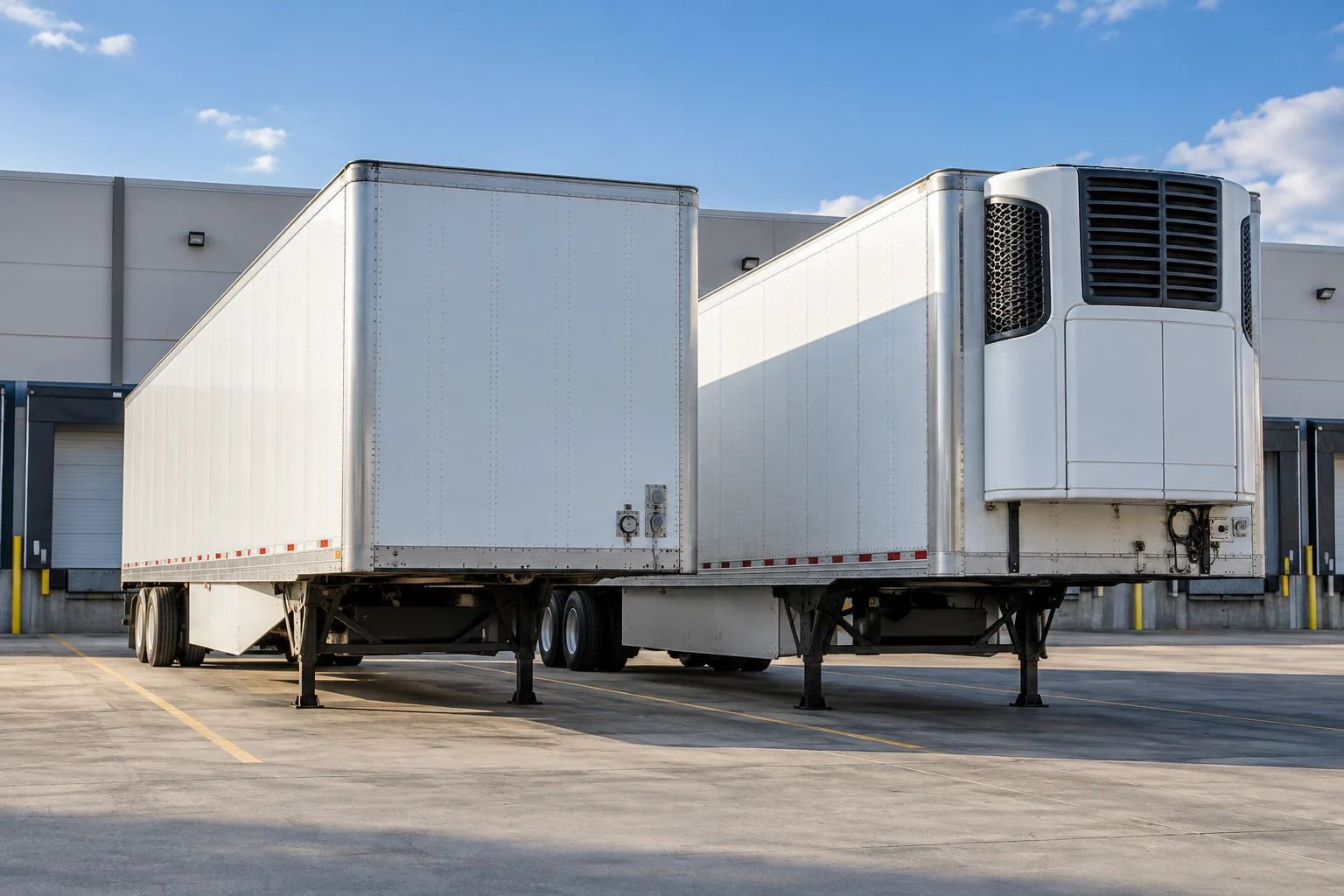
Choose between a dry van and a refrigerated trailer by the freight the business is equipped and contracted to carry. A reefer adds temperature-control equipment and an insulated body; it is not simply a more versatile dry van with a higher purchase price. Its suitability, support requirements and operating costs need their own assessment.
Stoughton's manufacturer explanation distinguishes an actively temperature-controlled refrigerated trailer from a dry van without that system. That basic difference helps define the purchase question, but it does not establish that a particular trailer meets a customer's cargo requirements. Stoughton refrigerated trailers
This guide concerns semi-trailer acquisition. It is not a refrigerated straight-truck price guide, a freight-rate forecast or instructions for handling temperature-sensitive cargo.
Start with the freight you can document
Separate current customer commitments from loads you hope to win. For each relevant lane or customer, record the equipment requirement, loading arrangement, expected frequency and any conditions the business must satisfy.
Do not buy temperature-control capability simply because someone says refrigerated freight pays more. Revenue per trip is only one part of a business case, and this article does not provide a rate or margin forecast. Ask what work the business can realistically accept and what additional obligations come with it.
If the plan relies on a new customer, identify what is confirmed. A conversation, a rate indication and a signed commitment are different levels of evidence. Preserve that distinction in the equipment budget.
Compare complete trailer roles
| Decision area | Dry-van proposal | Reefer proposal |
|---|---|---|
| Freight scope | Confirm the enclosed-trailer requirements | Confirm the full temperature-controlled equipment requirements |
| Equipment record | Trailer identity, body and chassis condition | Trailer identity plus refrigeration equipment and service records |
| Support | Trailer maintenance and repair arrangements | Trailer and refrigeration support arrangements |
| Customer acceptance | Confirm the exact equipment specification | Confirm specification, monitoring and other required capabilities |
| Budget | Acquisition and relevant ongoing costs | Acquisition plus separately assessed refrigeration-related costs |
Have qualified specialists and the customer assess suitability. Do not assume a refrigeration unit's presence establishes performance, compliance or an acceptable condition for a particular load.
The choice can affect the rest of the fleet plan. Ask who will maintain the equipment and what happens when the required trailer is unavailable. A substitute that works for ordinary freight may not meet a temperature-sensitive customer's requirements.
Treat used refrigeration equipment as a separate record
For a used reefer, request the exact trailer and refrigeration-unit identification, available service history and an independent condition assessment by qualified personnel. Keep known repairs and unresolved findings visible in the quote comparison.
Do not let a clean exterior substitute for that review. Likewise, do not interpret a seller's general description as a warranty of performance. Ask what testing or documentation the qualified reviewer considers necessary for the intended purchase and use.
This is a procurement record request, not a procedure for testing or maintaining the refrigeration system. Follow the appropriate manufacturer and professional guidance for technical work.
Compare the cash required before the first load
The following is an invented example, not a market-price comparison:
| Listed cost | Dry-van plan | Reefer plan |
|---|---|---|
| Equipment purchase | $34,000 | $59,000 |
| Identified pre-service work | $3,000 | $7,000 |
| Delivery and other quoted setup | $2,000 | $2,000 |
| Listed acquisition subtotal | $39,000 | $68,000 |
The $29,000 difference is not a conclusion that the dry van is the better investment. The two plans may serve different work. Compare each against the revenue and costs of the actual business it supports, without treating forecast freight as guaranteed.
Keep ongoing maintenance, fuel or energy, insurance, financing charges and other operating expenses outside this acquisition subtotal and budget them separately. A neat purchase total is not a full cost-per-mile model.
Examine the downside case
What happens if the expected temperature-controlled work begins later than planned? Which costs continue, and what other work could the equipment legitimately perform under the relevant requirements?
Do not assume a reefer can be assigned to any dry load without reviewing the customer, trailer and operating conditions. Equally, do not assume a dry van can substitute for temperature control because a trip is short.
For a fictional example, an extra $900 of monthly fixed costs would require $900 of additional contribution just to cover those costs. That is not the same as $900 of additional gross revenue. The business needs its own cost model and evidence of work, not a generic promise that a reefer pays for itself.
Compare seller support as well as equipment
Ask who handles a problem after delivery and what the written coverage includes. A trailer seller, refrigeration service provider and finance company may have different responsibilities.
Confirm the terms for delivery, acceptance, unresolved repairs and any included service. Have appropriate advisers review the agreements. Do not assume a financing payment pauses automatically if equipment is awaiting repair or customer acceptance.
For a multi-trailer purchase, identify the specific units in the proposal. A representative photograph or one inspected unit does not describe the condition of every trailer in the package.
Common comparison questions
Is a reefer always more flexible than a dry van?
It provides a different capability, but the actual equipment and customer requirements determine its useful work. Additional systems also create support and cost considerations.
Should purchase price decide the comparison?
No. Compare the complete acquisition plan, operating assumptions and documented freight opportunity. The cheapest trailer is not useful if it does not fit the work.
Can both types be considered for equipment financing?
Ask the provider about the exact equipment, condition, seller and transaction. General commercial-equipment information is not an asset-specific approval.
Match the purchase to the business you can support
Build the request around a documented freight requirement and an assessed trailer—not an assumed rate premium. Review Dengaro's equipment-financing requirements, then start an enquiry if you want to explore the defined equipment purchase. Eligible costs, approval and terms depend on provider review.