
Flatbed vs step deck: choosing equipment for your business
Compare flatbed and step-deck trailers by usable deck layout, actual loads, loading access and the complete quoted equipment package.
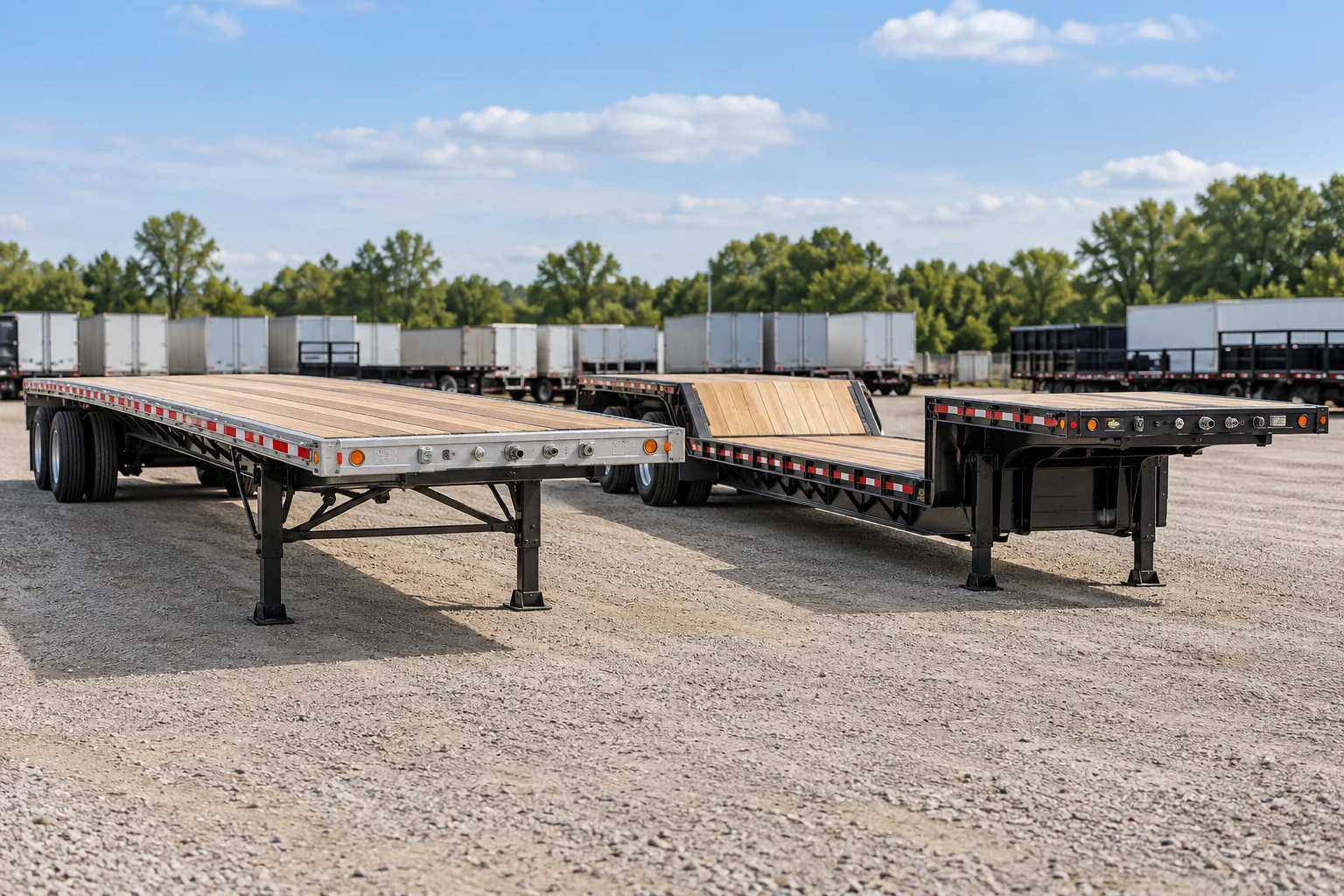
A flatbed and a step-deck trailer offer different deck layouts. Choose by the loads, loading access and routes the business needs to serve, then have the exact trailer and combination assessed. A lower section of deck is not a universal answer to load-height, capacity or transport-permission questions.
Fontaine's manufacturer literature separates flatbed and drop-deck models within its trailer ranges. That is a useful starting point for comparing actual configurations rather than treating every open-deck trailer as interchangeable. Fontaine trailer literature
This is a commercial equipment-purchase guide. It does not provide legal height limits, load-securement instructions, permit advice or approval for a particular load.
Build a load library before requesting quotes
List representative loads the business already carries or has a credible opportunity to carry. Record the dimensions, weight information supplied by the customer, loading arrangements and route requirements that need professional review.
Include awkward jobs, not just the easiest load. A trailer can fit the most common work yet fail on an important recurring job. Conversely, buying around one unusual speculative load can add cost without improving the core business.
Keep committed, recurring and speculative work in separate columns. Ask qualified transport and equipment specialists to assess the proposed trailer against that library. Do not treat a general product brochure as a transport plan.
Compare usable deck areas, not total length alone
A single overall-length number does not explain where the load can sit or how it will be loaded. Ask the manufacturer or dealer for the exact drawing and configuration of each proposed trailer.
| Quote detail | Why the buyer needs it |
|---|---|
| Deck layout and usable sections | To assess the actual load arrangement with qualified specialists |
| Exact model and options | To avoid comparing differently equipped trailers |
| Loading provisions | To confirm what equipment or access is separately required |
| Documented capacity information | To have the intended loads professionally assessed |
| Included accessories | To identify what is supplied and what needs a separate quote |
| Condition and repair record | To compare used units on more than appearance |
Do not calculate suitability from a headline capacity alone. Load distribution, configuration and the full transport arrangement need appropriate review. This article intentionally does not turn manufacturer specifications into loading instructions.
Identify what the trailer does not include
Ask whether the quote includes the exact accessories shown in photographs or demonstrations. Request separate pricing for required items that are excluded.
If the work needs loading equipment at either end, identify who provides it and whether that arrangement is confirmed. A trailer purchase does not automatically solve access at the customer's site.
For used trailers, request exact unit identification, condition records and an assessment by qualified personnel. Get known required work into the acquisition budget before comparing the financing amount. Do not assume a lower advertised price means a lower ready-for-work cost.
Use a comparable-scope worksheet
Here is a fictional example, not current trailer pricing:
| Listed acquisition item | Flatbed proposal | Step-deck proposal |
|---|---|---|
| Trailer | $42,000 | $49,000 |
| Required quoted accessories | $6,000 | $3,000 |
| Delivery and identified work | $2,000 | $2,000 |
| Listed subtotal | $50,000 | $54,000 |
The equipment-price difference is $7,000, but the listed package difference is $4,000. Neither figure establishes which trailer fits the business. That depends on the documented loads and the assessed configuration.
The example excludes operating expenses, financing charges, taxes and any other costs not listed. Obtain actual quotes rather than filling unresolved costs with invented figures in a real purchase decision.
Test the purchase against a normal month
Build a simple job matrix using your actual work. Mark which jobs each assessed configuration can serve and which require another arrangement. Have those judgments confirmed by the relevant qualified people.
Do not count every technically possible load as a sale. Separate equipment capability from customer demand, available drivers, scheduling and other business constraints.
For an invented planning example, a trailer that fits eight confirmed jobs and two speculative jobs should not be budgeted as if all ten are secured. Show a base case using confirmed work and a separate growth case. Keep the extra costs of serving the growth case visible.
This approach is more useful than saying one trailer type “earns more.” The article does not establish freight rates, utilization or a guaranteed return.
Keep the return and resale assumptions modest
If the business expects to sell the trailer later, record the assumed timing and what evidence supports the estimate. Do not treat a current asking price for a different unit as a guaranteed future sale value.
Ask what happens to the business plan if the trailer takes longer to sell or realizes less than expected. If financing has an end payment or other end-of-term obligation, compare that obligation with a conservative scenario rather than assuming the sale will cover it.
Have the provider explain the actual agreement. A general trailer comparison cannot establish ownership, payoff or return rights in a specific contract.
Common buying questions
Is a step deck always better for tall equipment?
Do not assume so. Have the actual load, trailer configuration, route and applicable requirements assessed. A lower deck section alone does not establish a lawful or suitable transport plan.
Can I compare trailers only by deck length?
No. Obtain the layout, configuration, capacity information and included equipment for the exact units. Overall length is only one part of the comparison.
Should the financing request include accessories?
Include genuine required purchases as separate quote lines and ask whether the provider can consider them. Do not assume every accessory or related expense receives the same treatment.
Request the trailer that fits the load plan
Once the equipment specialist has assessed the actual work, review Dengaro's equipment-financing requirements. You can start an enquiry with the itemized proposal, subject to confirmation of eligibility, approval and terms. The financing process does not replace transport, technical or legal review.