
Forestry equipment financing: purchase planning, costs and requirements
Plan forestry equipment financing around machine roles, complete packages, seasonal cash timing and costs outside the funded purchase.
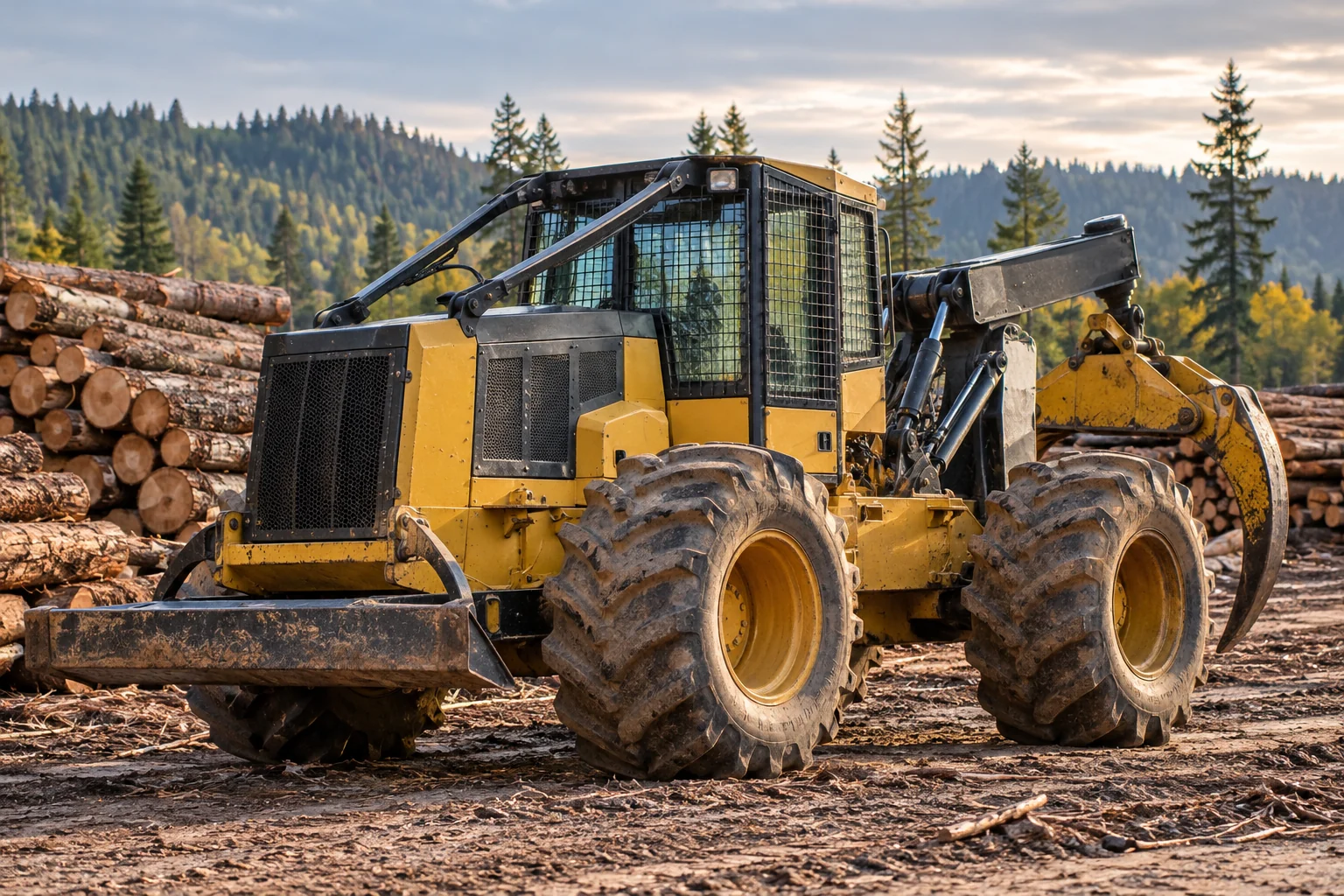
Forestry equipment financing should match a defined machine's role in the business, its condition and the cash pattern of the work supporting it. A payment schedule is only useful if the company understands the full equipment package and the obligations that remain during slower periods.
Wells Fargo's Tigercat Finance page describes financing for logging equipment and specialist machines, with transactions subject to credit approval. It also describes configurable structures, including seasonal skips. That is a particular program's scope—not a promise that every forestry purchase qualifies or that Dengaro offers the same structure. Tigercat Finance program
This article concerns purchase planning. It does not provide harvesting methods, equipment-operating instructions or environmental and land-access advice. Qualified personnel must establish suitability and applicable requirements.
Identify the machine's role in the production chain
Explain what the purchase will do and what equipment works before and after it. A new machine can increase one stage's capacity without improving the whole operation if another stage remains constrained.
Ask the operational team to identify the bottleneck the purchase is meant to address. Is the machine replacing an unreliable asset, adding a second crew or taking over work currently outsourced? Each reason needs different evidence.
Keep the equipment decision separate from the right to perform the work. A financing approval does not establish access rights, permits, customer commitments or the technical suitability of the machine.
Distinguish replacement from expansion
For a replacement, record the current asset's role, costs and limitations. Identify what will remain in the fleet and what may be sold or retired. Do not count sale proceeds as available cash until the assumptions and timing are clear.
For an expansion, document the additional work and supporting resources needed. A larger equipment payment may be only one part of the new crew's cash requirement. Staffing, transport, maintenance and other costs need their own assessment.
Separate signed work from opportunities being pursued. Do not make a multi-year obligation appear covered by treating every possible contract as secured revenue.
Define the full machine package
Request a quote for the exact machine, attachments, installed equipment and support included in the purchase. Have qualified specialists confirm compatibility and suitability for the intended work.
| Purchase record | Detail to collect |
|---|---|
| Machine | Model, year, serial number, configuration and condition |
| Attachments or heads | Exact included equipment and compatibility confirmation |
| Supporting purchases | Genuine required assets separately priced |
| Condition review | Qualified findings and identified preparation work |
| Transport | Responsibility, timing and cost |
| Service | Available local support, coverage and exclusions |
| Handover | Training, documentation and acceptance responsibilities |
A photograph showing an attachment does not establish that it is included. Ask for a written inventory. For used equipment, assess the machine and attachments individually rather than assuming their age and condition match.
Model the season without hiding costs
A seasonal structure changes payment timing; it should not be assumed to eliminate the cost of financing. Ask for the actual schedule, total payments, fees and treatment of any deferred amounts.
For a fictional annual example, twelve payments of $5,000 total $60,000. Nine payments of $6,700 total $60,300 even though three months have no scheduled payment. Those numbers are invented, not provider offers. They illustrate why the complete schedule matters.
Ask whether the proposed pattern fits the business's documented cash receipts, not simply its busiest working months. Revenue earned and cash received can occur at different times. Use your own records and professional financial advice where needed.
Also test a weaker season. Equipment obligations may continue when a customer delays work or the business cannot operate as planned. This guide does not estimate weather, production or revenue outcomes.
Make the acquisition gap explicit
Consider this fictional equipment budget:
| Assumed item | Amount |
|---|---|
| Defined machine | $220,000 |
| Required attachment package | $35,000 |
| Identified preparation work | $12,000 |
| Transport and handover | $8,000 |
| Listed acquisition total | $275,000 |
If the provider considers $255,000 of equipment and attachments, $20,000 remains outside that amount. Ask about each cost rather than assuming a “full solution” description covers every item for your transaction.
Keep operating reserves separate. The amount needed to buy and receive the machine is not the same as the cash required to support the operation until customers pay.
Compare financing at the intended ownership endpoint
Ask what the business owes upfront, during the term and at the end. Clarify ownership, purchase or return provisions and have appropriate advisers review uncertain contractual, tax or accounting matters.
Do not rank proposals solely by the monthly payment. A later amount or different endpoint can explain a lower periodic payment. Likewise, do not assume future refinancing will be available to cover a final obligation.
Use the same equipment and included services in each comparison. A proposal that finances the machine but excludes a necessary attachment does not cover the same purchase as one that includes both.
Review downtime and support before committing
Ask who provides qualified service where the machine will operate and what the written arrangement includes. Clarify parts support, transport responsibilities and any replacement-equipment provisions.
Avoid treating a general statement about dealer support as a guaranteed response time. Identify which customer commitments depend on the asset and what practical alternatives exist if it is unavailable.
For used purchases, obtain records and a qualified inspection before relying on the asking price. Price required work separately and distinguish a confirmed repair quote from a rough allowance.
Common financing questions
Can payment timing follow a forestry season?
Some named programs describe seasonal structures. Availability and actual terms require provider review; a skipped month does not mean the financing cost disappears.
Can an attachment be financed with the machine?
Provide the genuine itemized package and ask. Compatibility, seller, condition and eligible costs must be confirmed for the transaction.
Does approval mean the expansion is financially sound?
No. The business still needs a credible workload, operating plan and cash forecast. Provider approval does not guarantee revenue or project suitability.
Present a purchase the business can support
Review Dengaro's equipment-financing requirements after the machine role and itemized quote are clear. If you start an enquiry, explain replacement versus expansion and ask about the exact equipment and payment needs. Approval, eligible costs and terms remain subject to provider review.