
Material handling equipment financing: purchase planning, costs and requirements
Organize material-handling fleet purchases by asset, location, delivery stage and payment obligations before comparing finance proposals.
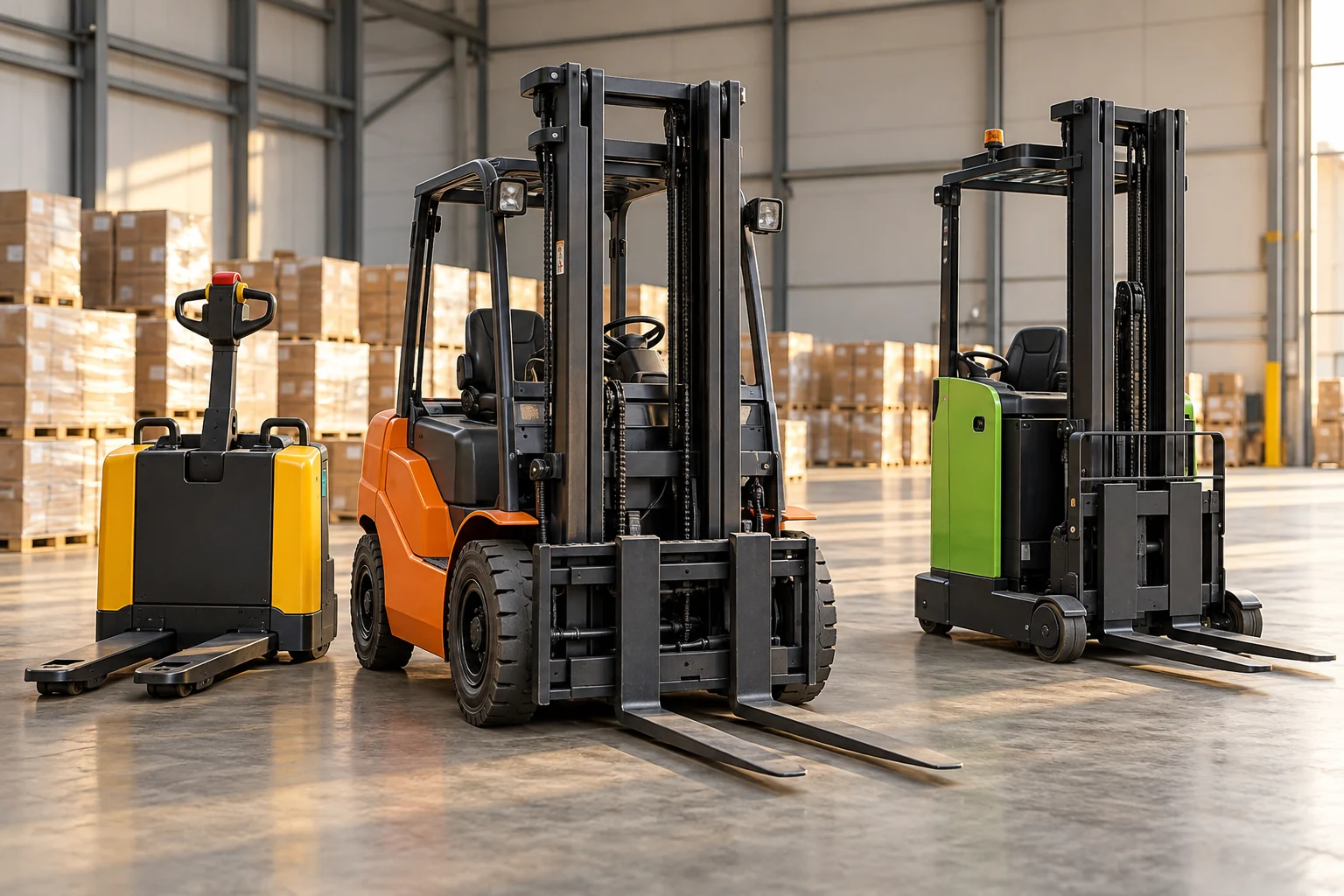
Material handling equipment financing should follow a clear fleet plan: which assets are being acquired, when each is needed and what work each will perform. Financing one forklift is different from coordinating several purchases across facilities or replacing a fleet in stages.
Toyota Industries Commercial Finance's manufacturer-linked page describes master-lease and credit-line options for its customers. Its master-lease description allows multiple purchases over time under one agreement, while the credit-line description refers to qualifying customers. These are specific program examples, not proof that every business or asset qualifies or that Dengaro offers identical arrangements. Toyota financial services
This guide focuses on organizing a multi-asset purchase and comparing financing responsibilities. It does not select equipment for a site or provide operating and safety instructions.
Give every asset a job and a location
Create an asset list before comparing providers. For each proposed purchase, record its assigned task, facility, expected arrival date and whether it replaces an existing machine.
Ask the qualified operational team to confirm the equipment specification. The financing request should use that approved configuration rather than ask a lender to determine rack compatibility, load suitability or safe operation.
Identify shared supporting equipment and avoid counting it twice. Conversely, do not assume one charger, accessory or service arrangement supports all assets without appropriate confirmation.
Separate the fleet plan from the first purchase
The business may have a longer-term replacement plan while only the first group of assets is ready to order. Keep those stages visible.
A proposed master agreement or credit arrangement does not automatically approve every future purchase. Ask which equipment, amounts, sellers and dates require further review. Obtain the actual process in writing.
Do not order later-stage equipment simply because the paperwork appears easier. Each asset should still meet a genuine business requirement and pass the relevant operational and financial checks.
Build a schedule of acquisition events
| Event | What must be clear |
|---|---|
| Purchase approval | Exact asset, quote and responsible decision maker |
| Supplier order | Configuration, deposit and delivery conditions |
| Site readiness | Qualified confirmation of required facilities and support |
| Delivery | Unit identification, receiving responsibility and timing |
| Acceptance | Agreed verification and unresolved-issue process |
| Funding or payment start | Provider's actual conditions and date |
| Ongoing service | Coverage, location and responsible party |
Ask how a delayed asset affects the financing arrangement. Does each unit start separately, or does the proposal use another structure? Do not assume all payments begin only when the entire fleet is operating.
Keep supplier delivery promises separate from provider funding conditions. A ready invoice does not necessarily mean the site is ready or the equipment has been accepted.
Compare one package with staged purchases honestly
Here is a fictional planning example, not equipment pricing:
| Proposed stage | Assumed equipment amount |
|---|---|
| First facility: two approved units | $70,000 |
| Second facility: one later replacement | $35,000 |
| Required supporting equipment | $10,000 |
| Total planned equipment | $115,000 |
If only the first facility's $70,000 purchase is confirmed, do not describe the full $115,000 as already ordered. The later replacement and supporting scope may still need approvals or quotes.
Suppose delivery and site preparation add $8,000 outside the equipment total. The complete listed project becomes $123,000, but the provider must determine which costs it can consider. A fleet total is not automatically an eligible financed amount.
Keep service and financing comparisons separate
Ask which maintenance, inspection, repair or replacement arrangements are included in each proposal. A lower equipment payment may exclude services another package includes.
Create a responsibility table for the business, dealer and finance provider. Note who handles each asset at each location and what happens if equipment moves between facilities.
Do not assume a finance company provides technical support or that a service problem pauses payments. The actual agreements define those obligations. Have appropriate advisers review unclear contract provisions.
Compare cash obligations by asset group
For a fictional comparison, one proposal requires $6,000 upfront and 48 payments of $2,400, totaling $121,200 in listed cash. Another requires $2,000 upfront, 48 payments of $2,100 and a $20,000 final amount, totaling $122,800.
The second has a lower periodic payment but a listed total $1,600 higher. This is not an APR or after-tax comparison. It excludes unlisted fees and assumes an equivalent intended endpoint; real proposals must be reviewed on their actual terms.
For a staged fleet, also show when each group begins paying. A monthly total that looks manageable after an old contract ends may overlap with that contract if delivery happens earlier. Use actual dates rather than an average monthly estimate.
Plan the old equipment's exit
Record whether replaced assets will be returned, sold, retained as backup or disposed of through an appropriate process. Ask the existing provider about obligations before assuming the business can sell or release an asset.
Keep estimated proceeds separate from confirmed proceeds. Do not count a hoped-for sale as cash already available for a deposit.
For leased equipment, obtain return requirements and dates from the actual agreement. The new fleet's delivery date should not be treated as automatic settlement of the old fleet's obligations.
Common fleet-financing questions
Does a master agreement remove future credit review?
Do not assume that. Ask the provider what each additional transaction requires and what limits or conditions apply.
Can equipment at several locations be included?
The provider must confirm the assets, locations, business entities and transaction structure. Technical and service suitability also need separate review.
Should every machine use the same financing structure?
Not necessarily. Compare the actual useful role, timing and intended end position. Administrative simplicity is valuable, but it should not hide unsuitable terms.
Submit a clear asset-and-date plan
Review Dengaro's equipment-financing requirements after the fleet scope is defined. If you start an enquiry, separate confirmed purchases from future plans and identify each asset's location and costs. Provider review determines available structures, eligibility, approval and terms.