
Motorcoach price: a commercial buyer’s budget guide
Budget for a commercial motorcoach using unit-specific condition, passenger-service requirements and the work included before delivery.
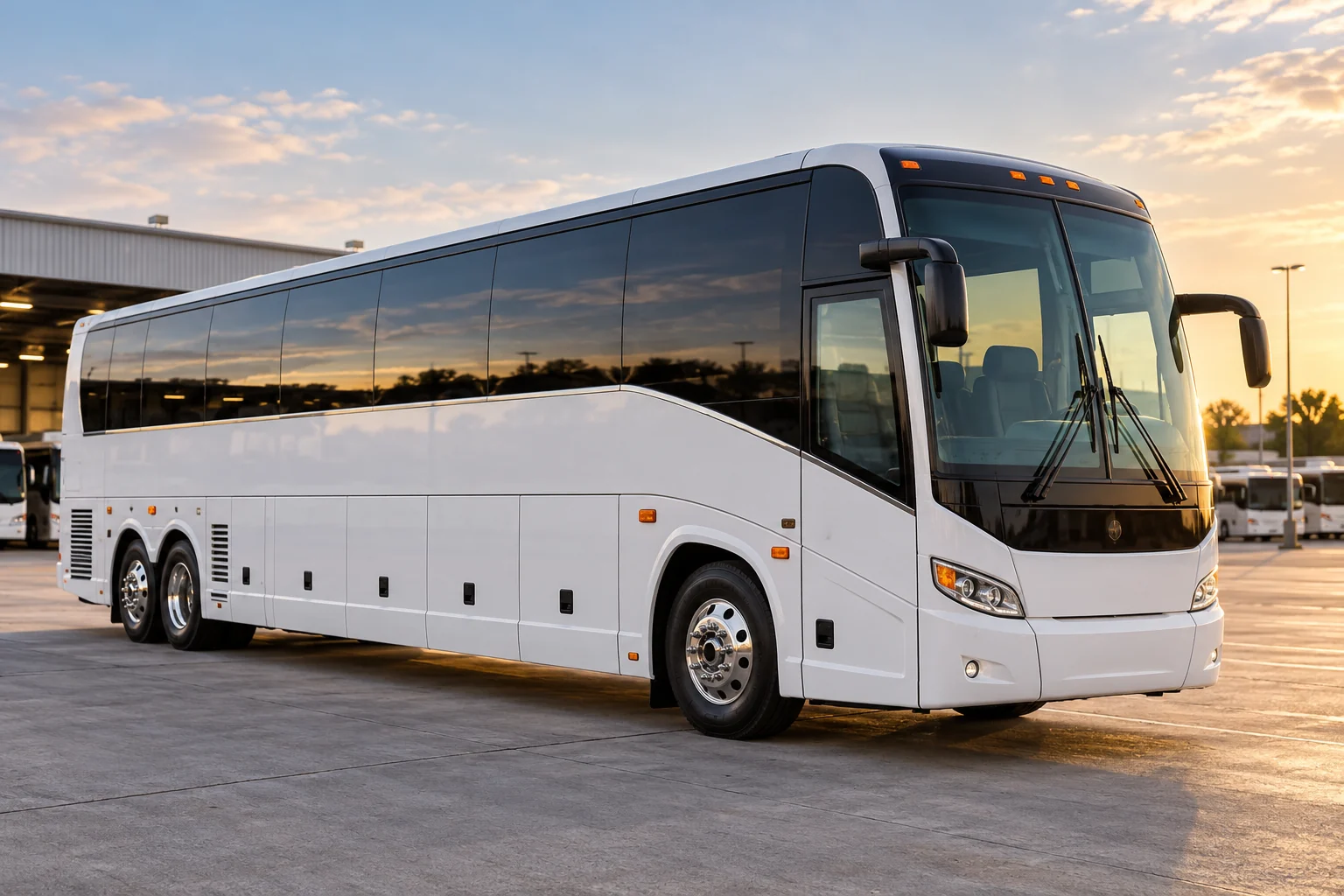
A commercial motorcoach price should be evaluated against the specific passenger service, vehicle condition and work included before delivery. Do not compare a standard seated coach, a specialized conversion and a private motorhome as if they were the same asset. For a fleet purchase, the useful number is the cost of a defined coach ready for the business's assessed needs—not simply the lowest asking price.
As dated examples, BuyCoachBus listings reviewed October 30, 2026 showed a 2008 MCI D4505 at $55,000, a 2012 MCI J4500 at $129,029, and a 2013 MCI J4500 at $151,900. These are individual advertised prices, not a market range, confirmed availability or proof of comparable condition. Dealer MCI inventory.
Define the service before comparing vehicles
Prepare a purchase brief for the trips the business actually plans to operate. Record passenger needs, trip lengths, luggage requirements, accessibility needs and the planned operating area. Have qualified professionals confirm the vehicle's suitability and applicable requirements.
A coach selected for one service may not fit another. Do not infer suitability for school, charter, employee or other passenger transportation solely from a seating count or a seller's category label. This article does not determine licensing, accessibility compliance or permitted passenger use.
Keep private recreational vehicles outside a commercial-coach comparison unless the proposed transaction genuinely concerns a different business asset. A luxury interior photograph is not evidence that the vehicle matches the planned operation.
Compare each coach as a distinct asset
Use a record for every candidate rather than a spreadsheet containing only year and price:
| Record | What to establish |
|---|---|
| Identity | VIN, model, year and documented configuration |
| Passenger arrangement | Actual seating and features assessed for the intended service |
| Mechanical condition | Qualified inspection findings and available maintenance history |
| Interior and equipment | Condition and included work for seating, climate control and other systems |
| Ownership and transaction | Seller identity, documentation and matters requiring professional review |
| Handover | Work promised, delivery, acceptance and coverage in writing |
Keep seller claims separate from inspection findings. If records are missing, label them unknown rather than assuming the absence of a reported problem proves good condition.
Do not estimate remaining life from mileage alone. The purchase decision needs a unit-specific assessment, and this guide provides no mechanical inspection or repair instructions.
Read the refurbishment description carefully
MCI describes different levels of pre-owned offerings, including vehicles with varying preparation and support arrangements. That is a reason to ask which specific program and work apply to a candidate—not to assume every used MCI carries the same coverage. MCI pre-owned program.
Request a written list of work included in the quoted price. Does the seller plan to repair identified items, complete agreed interior work or deliver the coach in its current condition? Which commitments must be completed before acceptance, and who verifies them?
Keep an advertised warranty separate from a maintenance plan. Obtain the actual terms, exclusions and service process for the proposed purchase. General references to a manufacturer's support network do not establish that every repair or every vehicle is covered.
Budget for the acquisition, not just the vehicle
Here is a fictional example. These amounts are not market estimates or supplier quotes.
| Assumed item | Budget |
|---|---|
| Selected used coach | $140,000 |
| Required quoted mechanical work | $18,000 |
| Agreed passenger-area work | $9,000 |
| Inspection and delivery | $3,000 |
| Acquisition subtotal before other charges | $170,000 |
If a proposed financing offer covered only the $140,000 vehicle price, $30,000 of the illustrated subtotal would remain outside it. The actual provider may treat costs differently; ask which items are eligible and what cash is due before funding.
Keep taxes, registration, insurance, staffing and operating reserves visible in the appropriate budget. Do not silently describe the acquisition subtotal as the total cost to run a passenger service.
If comparing a higher-priced coach with less quoted work, use the same inspection standard and intended service. A lower repair estimate does not prove lower future cost, and a higher purchase price is not automatically a condition guarantee.
Test the delivery date against committed work
A purchase can be financially approved before the coach is available for use. Identify what work, assessment and handover still must occur. Ask the seller for a realistic schedule and distinguish a target from a contractual commitment.
Consider what happens if the coach is delayed. Does the business have an actual backup vehicle or an agreed outside service? Do not promise customer capacity based on an unconfirmed delivery date. Have responsible staff address operational and regulatory requirements separately from the financing process.
For a fleet addition, identify which actual demand it serves. Separate contracted trips from projected bookings and account for operating expenses before estimating cash available for payments. A seating capacity multiplied by an assumed fare is not a reliable earnings forecast.
Make the purchase request specific
Provide the final quote, vehicle identity, condition information and itemized work scope. Ask the provider whether it supports the particular coach, age, seller and use. A lender advertising commercial vehicles does not necessarily finance every specialized conversion or passenger operation.
Start with Dengaro's equipment financing requirements and confirm the exact transaction. No coach price, model or fleet size establishes approval, terms or permission to operate.
A useful motorcoach budget shows the purchase price, the work required and the separate resources needed to bring the assessed coach into the business. That is a stronger basis for a decision than ranking vehicles by age and a single advertised number.