
MRI machine cost: a commercial buyer’s budget guide
Build an MRI purchase budget from the scanner quote, site work, installation, service and funding timeline, with clear specialty-equipment conditions.
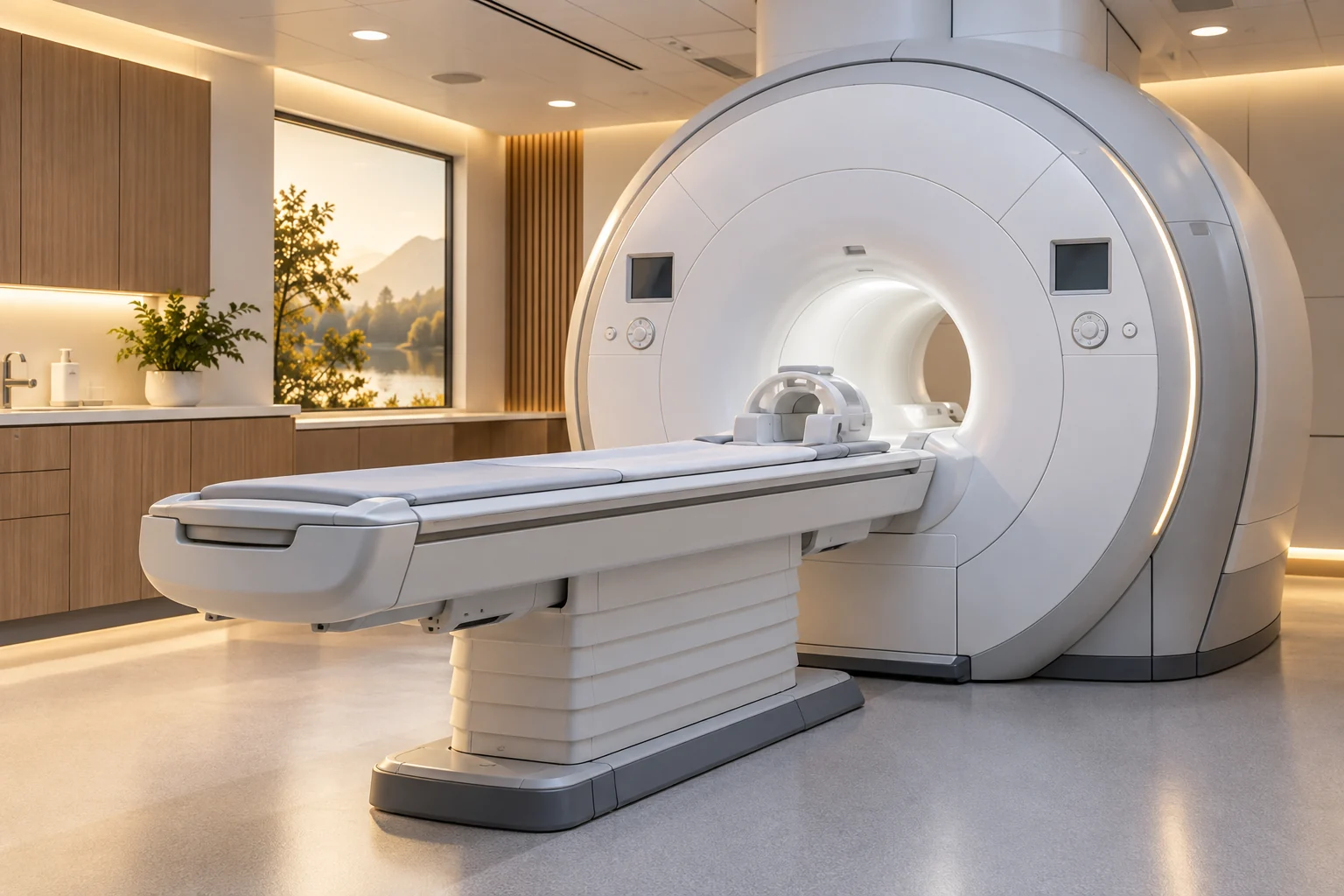
An MRI purchase needs a project budget, not just a scanner price. Start with a quote for the exact system and configuration, then price site work, delivery, installation, acceptance and service separately. A low equipment figure is not a reliable estimate of what your facility must spend before the system is ready for its intended use.
As one supplier reference, Block Imaging's guide, reviewed again for this article on November 1, 2026, describes used or refurbished 1.5T systems in a $150,000–$500,000 range. Its model-price table excludes installation and service. This is a supplier's broad guide—not a current quote, a new-system range or a promise that a particular scanner is available at that price. Block Imaging's 1.5T price guide
The next step is to turn that broad starting point into a documented purchase scope. This guide addresses commercial budgeting only. Your clinical leadership and qualified technical professionals must decide which system is appropriate and what is required for safe installation and operation.
Define the system before comparing prices
Two quotes with the same field strength may still cover different packages. Have the vendor list the exact model, year, condition, included components, software and support terms.
Use a scope sheet with clear sign-off responsibilities:
| Scope item | Who should confirm it? |
|---|---|
| Intended clinical use and required configuration | Your clinical leadership and qualified specialists |
| Exact equipment and included accessories | Supplier, checked against the agreed specification |
| Software licenses and transfer rights | Supplier and your purchasing or legal team |
| Site suitability and installation plan | Manufacturer and qualified project professionals |
| Service coverage and excluded items | Service provider and your operations team |
| Total project funding | Your finance team and any proposed lender |
This prevents the purchasing team from choosing a clinical configuration solely because it has a lower price. It also prevents a missing accessory or license from being mistaken for a genuine saving.
Do not assume a generic description such as “complete system” resolves those details. Ask for an inventory attached to the purchase agreement and a written list of exclusions.
Keep the scanner price separate from the project total
Create a budget with one owner and one written source for every line. The following is an original purchasing worksheet, not a technical installation specification.
Equipment package
Record the scanner price and everything expressly included. Ask which optional components are required by your approved specification and whether their prices are firm. Identify separate software charges and any transfer conditions for pre-owned equipment.
Site and construction work
Obtain a site-specific assessment before treating an existing room as ready. GE HealthCare's planning portal states that a system's full preinstallation information and final installation drawings are needed for site-specific planning. A generic floor plan or an old installation budget is not a substitute. GE HealthCare site planning
Have qualified professionals determine the work, permissions and technical requirements. The buyer's role is to obtain the scope, price, responsible party and completion date—not to design the installation from a blog checklist.
Removal, delivery and installation
Clarify which seller or contractor handles each stage, where responsibility transfers and what happens if the site is delayed. Ask whether the quoted price includes the complete agreed delivery and installation scope or only one part of it.
Acceptance and handover
Agree on who performs the required checks, what documentation is delivered and what must happen before final acceptance. Have qualified clinical and technical personnel define those requirements. Do not use a simple power-on demonstration as your own substitute for professional acceptance.
Service and operating reserves
Separate the purchase from ongoing obligations. Ask for written warranty and service terms, including exclusions, renewals and support availability. Keep a business reserve for costs outside the equipment agreement rather than assuming financing covers everything.
A worked budget: why the loan request may differ from the project
Here is a hypothetical planning example. These figures are invented to show the worksheet and are not price estimates, contractor quotes or an available financing offer.
| Assumed item | Amount |
|---|---|
| Agreed scanner package | $300,000 |
| Separately quoted site work | $140,000 |
| Delivery and installation scope | $60,000 |
| Initial service allowance | $35,000 |
| Project contingency | $40,000 |
| Total planning budget | $575,000 |
The project budget is $275,000 more than the scanner package. That difference must be addressed even if the equipment quote itself is attractive.
Now suppose a proposed lender confirms that only $330,000 of this particular project is eligible for its agreement. The remaining funding need is $245,000, before considering any additional charges or changes. That amount is not automatically covered by calling the transaction “equipment financing.”
Replace every assumption with a written quote or a clearly labeled reserve. Avoid counting an item twice when a supplier includes it in a package and a contractor lists it separately.
New, used and refurbished need different questions
Do not treat “refurbished” as a universal specification. Ask the seller to describe the work performed, the documentation supplied and the support attached to that specific unit.
Siemens Healthineers describes a defined selection, de-installation, refurbishment, installation and service process for its own ecoline program. That demonstrates why a named program's scope matters; it does not establish equivalent work or warranty terms for every pre-owned system offered by another seller. Siemens Healthineers ecoline process
For each proposal, ask:
- Which unit or configuration is actually being sold?
- What work is complete, and what remains before shipment?
- Which records can your qualified reviewer inspect?
- What is included in the warranty, and who performs the work?
- Are software rights and support arrangements confirmed in writing?
- What happens if the agreed acceptance conditions are not met?
For a new-system comparison, obtain a current manufacturer or authorized supplier quote. Do not extrapolate a new scanner's price by multiplying the refurbished range above. Different configurations and contract scopes make that shortcut unreliable.
Build a funding timeline, not only a monthly-payment estimate
List each deposit, milestone and final payment next to the expected date and funding source. Then ask the proposed lender when it would release funds and what conditions must be satisfied first.
This can reveal a gap between when a contractor needs payment and when an equipment agreement can fund. Address it before signing, rather than assuming delivery, installation and financing always happen together.
Also ask who bears costs if the room is late or delivery slips. Keep responsibilities clear across the supplier, contractors and lender. One party's quoted completion date is not automatically a commitment from the others.
The worksheet should distinguish:
- Confirmed equipment costs eligible under the proposed agreement.
- Costs the business must fund separately.
- Unpriced items that still need quotes.
- Reserves that are planning choices, not vendor charges.
Confirm specialty-equipment eligibility early
MRI is a specialty purchase. General equipment-financing information does not confirm that a provider supports your scanner, seller, condition, healthcare business or installed-project scope.
You can review Dengaro's equipment-financing requirements as a starting point. Before paying a nonrefundable deposit based on expected financing, ask for confirmation that the specific transaction can be considered. Neither this article nor a general application establishes approval, rates, timing or eligible costs.
Clinical, facility, legal and payer-related requirements need the appropriate professional review. Financing approval is not permission to operate the equipment, and this budget guide does not establish regulatory compliance or reimbursement eligibility.
Common purchasing questions
Does the advertised MRI price include installation?
Do not assume it does. Request an itemized scope and exclusions. The supplier price reference above specifically separates its model-price table from installation and service costs.
Is a refurbished scanner always the less expensive choice overall?
The purchase price alone cannot answer that. Compare the actual package, documented condition, site work and support obligations. Let qualified professionals assess whether each proposed system meets the intended requirements.
Can the whole project go into one equipment agreement?
Only the provider can confirm that for the actual transaction. Keep construction, service, reserves and equipment distinct so you can identify what is and is not included.
Turn the estimate into a decision
A useful MRI budget ends with an agreed equipment specification, supplier quote, professionally defined site scope, service terms and a payment timeline. Until those are in place, a broad scanner price is only a starting point.
If you want to explore funding, start a Dengaro enquiry with the itemized proposal and ask first whether the specialty transaction fits available options. Keep clinical selection and site approval with the qualified teams responsible for them.