
Playground equipment financing: purchase planning, costs and requirements
Separate playground equipment from surfacing, installation and site work when comparing project funding and payment timing.
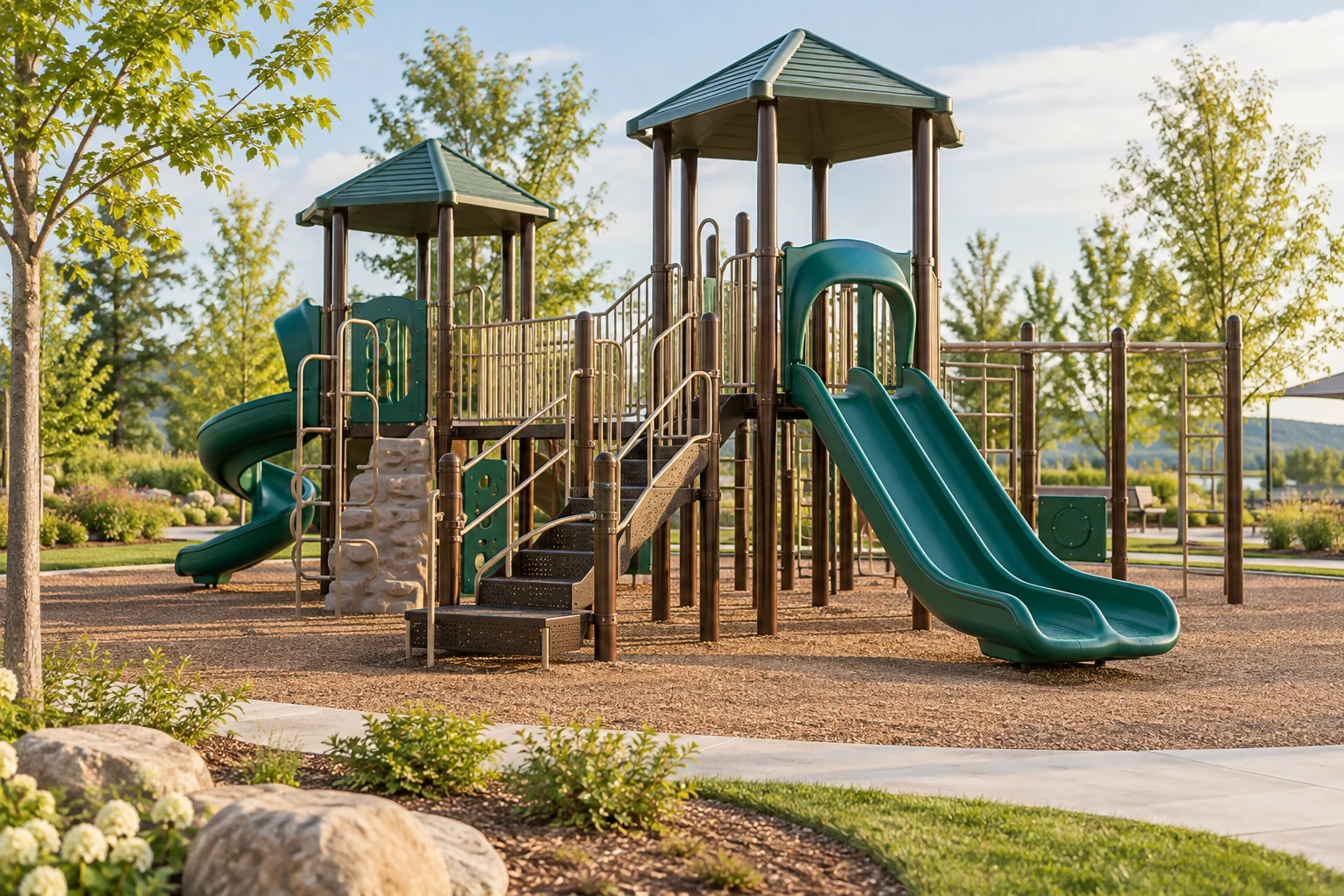
Playground equipment financing should be separated from the larger site project. The play structures, surfacing, installation and site work may involve different suppliers, payment dates and funding rules. A quote for equipment alone is not a complete project budget, and financing approval does not establish that a playground is safe or ready to open.
Playworld's manufacturer information describes both phased projects and a leasing program. Its budgeting page separately identifies costs such as surfacing, shipping, site preparation, storage and installation. Those are supplier-specific planning resources—not confirmation that every organization or cost qualifies through Dengaro. Playworld financing options, Playworld budgeting
This guide addresses procurement for a business or organization. Qualified designers, installers, inspectors and relevant authorities must determine suitability, accessibility, safety and applicable requirements. It is not a playground-design or installation manual.
Identify the buyer and funding route first
A private business, public body and nonprofit organization may have different purchasing and funding processes. Do not assume a commercial equipment application is suitable for all three.
State who will own the equipment, who controls the site and who is authorized to commit to the purchase. Ask the proposed provider whether it supports that entity and transaction before relying on an assumed approval.
If grants, donations or other funds are part of the plan, record their conditions and timing separately. An application or fundraising goal is not the same as cash available to pay a supplier. Have appropriate advisers review any restrictions.
Define the complete project boundary
Ask the qualified project team to identify what must be completed for the intended installation. Purchasing staff can then obtain itemized proposals and assign responsibility without making technical design decisions.
| Project component | Commercial information to obtain |
|---|---|
| Play equipment | Exact approved configuration and supplier quote |
| Surfacing | Separate approved scope and responsible supplier |
| Site preparation | Qualified assessment, scope and written cost |
| Freight and receiving | Delivery, unloading and storage responsibilities |
| Installation | Qualified provider, scope and payment milestones |
| Inspection and handover | Required review, documentation and responsible parties |
| Ongoing care | Support arrangements and costs to budget after opening |
Do not treat “complete playground” as a clear scope until the inclusions and exclusions are written down. If several suppliers are involved, identify who coordinates the interfaces and schedule.
Compare a phased project with a complete installation
Phasing can spread purchases over time, but it needs qualified planning. Do not assume a partial installation is suitable or ready for use simply because the equipment has arrived.
Ask the project team what each phase includes, what must be completed before it can be accepted and what future work depends on it. Price repeated delivery, mobilization or other costs that may arise from separate stages.
A complete installation may have a larger upfront requirement but avoid some repeated project costs. Neither approach is automatically cheaper or more appropriate. Compare the actual approved scopes and funding dates.
Build the funding gap by cost category
Here is a fictional project budget, not playground market pricing or a compliant design:
| Assumed item | Amount |
|---|---|
| Approved play equipment | $55,000 |
| Separately specified surfacing | $18,000 |
| Site preparation | $12,000 |
| Freight and installation | $10,000 |
| Other required project review and handover | $5,000 |
| Listed project total | $100,000 |
If a provider considers only the $55,000 equipment purchase, the remaining $45,000 needs another source. That does not establish which costs an actual provider will fund; ask for a line-by-line decision.
Keep ongoing maintenance and operating reserves outside this acquisition table. A funded purchase does not eliminate the cost of caring for the installation after handover.
Coordinate delivery with site readiness
Ask the qualified project team to confirm when the site can receive equipment and what must happen before installation. Obtain supplier delivery terms and identify who pays for storage if dates do not align.
Playworld's budgeting resource specifically includes storage when equipment arrives before site preparation is complete. Use that as a prompt to price the actual risk, not as a fixed allowance for every project.
Do not assume financing starts only after the playground opens. Ask the provider what triggers funding, acceptance or payments, and compare those dates with the project schedule.
Review ownership and end obligations
For a financing or lease proposal, ask who owns the equipment during and after the term, what amounts are due and what obligations apply at the end. Installed equipment may raise practical questions that need professional review.
Do not assume it can be returned or moved without additional cost simply because an agreement uses the word “lease.” Ask the provider and qualified project advisers to explain the actual arrangement.
For an invented cash comparison, $5,000 upfront plus 36 payments of $1,700 totals $66,200. A second proposal with $1,000 upfront, 36 payments of $1,500 and a $12,000 final amount totals $67,000. These fictional figures illustrate listed obligations, not rates, tax treatment or available offers.
Keep opening approval separate from purchase approval
The business needs a clear handover process led by the appropriate qualified people. Record what documentation, inspections or other reviews are required and who signs off each stage.
This article cannot establish those requirements or certify an installation. Do not treat the supplier invoice, finance approval or delivery receipt as proof that the project can open.
Keep unresolved project items visible rather than marking the whole purchase complete because most equipment is installed. Ask the responsible parties to document the remaining work and its effect on payment and acceptance.
Common financing questions
Can a nonprofit use ordinary business equipment financing?
Ask the provider about the actual entity and transaction. Do not assume eligibility from a general equipment category or another organization's experience.
Does an equipment quote include surfacing and installation?
Only if the written proposal includes them. Obtain separate scope and cost confirmation for all required project components.
Can we finance one phase at a time?
The provider and qualified project team must review the proposed structure. Separate funding does not establish that a partial installation is suitable for use.
Start with the approved project and itemized costs
Review Dengaro's equipment-financing requirements. If you start an enquiry, identify the purchasing entity and distinguish equipment from site and project costs. Availability, eligibility, approval and terms require provider review; technical and opening decisions remain with qualified professionals.