
Rental fleet financing: purchase planning, costs and requirements
Plan rental fleet additions with itemized assets, demand evidence, utilization scenarios and supplier payment milestones before reviewing financing.
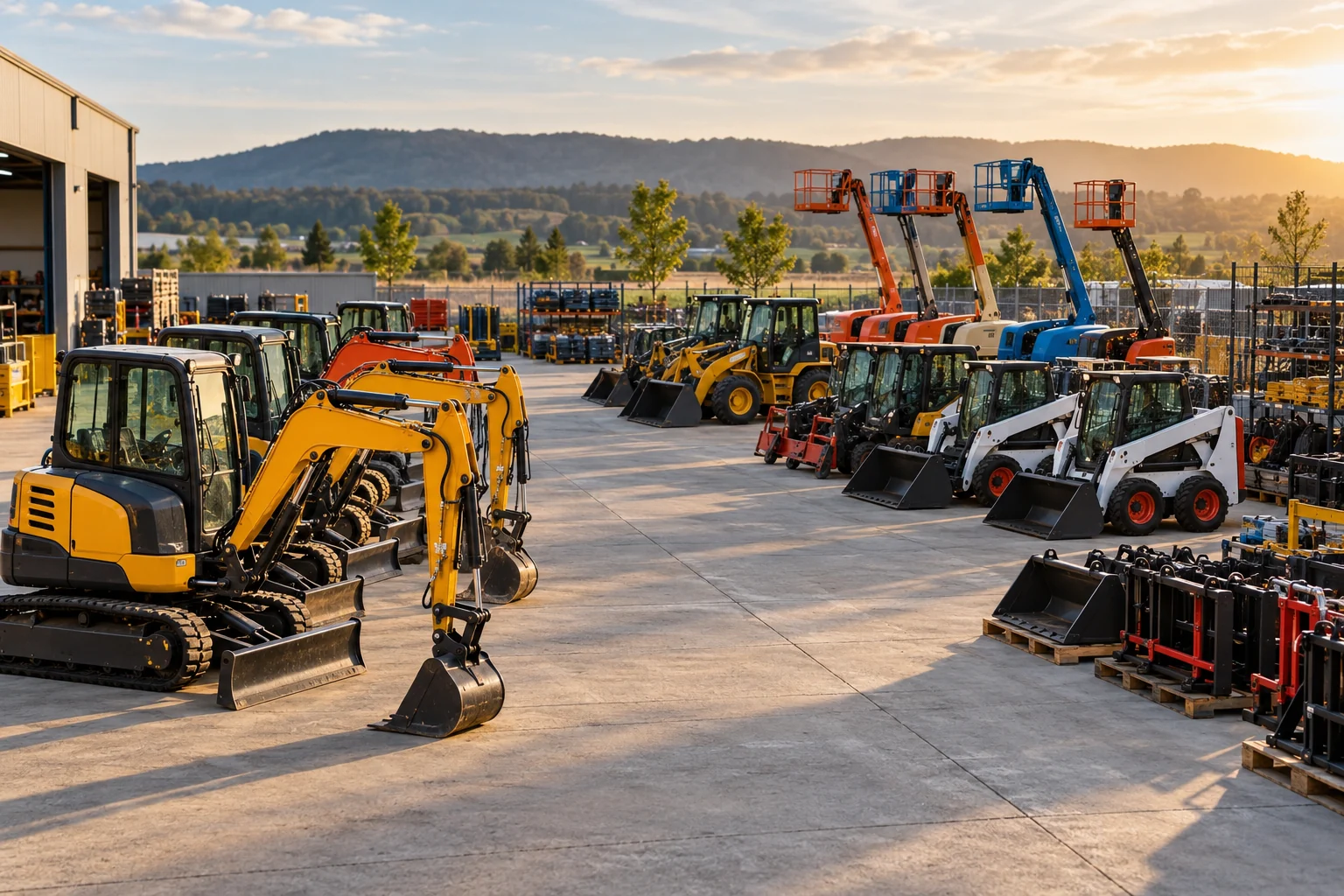
Rental fleet financing is a purchase decision for the rental business, not simply a way for a contractor to rent a machine. A useful request identifies the assets being bought, explains how they fit the existing fleet and shows what happens when utilization is lower than expected. Tell the provider explicitly that customers will rent the equipment; do not describe it as equipment used only by your own staff.
The central question is whether the proposed fleet addition makes sense on its own terms—not whether a monthly payment can be covered by an optimistic number of rental days.
Decide whether you are replacing, expanding or entering a category
These three purchases need different evidence.
Replacement: identify the machine leaving service, its history and what the replacement changes. Avoid counting both machines as future earning assets if one will be sold.
Expansion: show the existing demand or other evidence behind the extra capacity. Distinguish completed rentals and documented missed enquiries from a general belief that the market is busy.
New category: make the uncertainty explicit. An established rental business can still be new to a particular equipment type. Include the proposed customer base, support requirements and the cost of learning that category.
Wells Fargo's commercial equipment page expressly lists rental companies among the businesses it serves through construction-equipment financing solutions. That shows rental-business use can be a distinct provider category; it does not establish eligibility through Dengaro or any other provider. Source: Wells Fargo equipment financing.
Give each machine its own line
A fleet package should be more than one total. List the model, quantity, condition, seller, price and identifying information available at the time of the request. Keep attachments and support equipment visible.
For used equipment, add condition records and qualified inspection findings. For a new order, record delivery assumptions and what is included in commissioning or training. Ask the provider how multiple vendors, staged deliveries or substitutions would be handled.
A useful fleet-addition sheet includes:
| Asset information | Operating information |
|---|---|
| Exact machine and included attachments | Intended rental customer and application |
| Purchase and delivery cost | Expected availability date |
| New or used condition evidence | Storage, transport and support arrangements |
| Existing obligations or trade-in details | Evidence behind expected demand |
| Seller and payment milestones | Planned maintenance and downtime assumptions |
Have qualified professionals determine equipment suitability, maintenance and safe rental operations. The financing worksheet does not establish that a machine can lawfully or safely be rented for every proposed use.
Test utilization before choosing a payment
Use a simple model to see which assumptions matter. Do not confuse it with a guaranteed return or a complete profit forecast.
In this fictional example, one machine has an assumed monthly equipment payment of $1,200 and $300 of other allocated monthly fixed costs. Assume each paid rental day contributes $150 after the variable costs included in the exercise.
The $1,500 assumed monthly fixed amount divided by $150 gives 10 paid days to cover only those included costs. At eight days, the contribution is $1,200, leaving a $300 gap. At twelve days, it is $1,800, leaving $300 before anything omitted.
The figures are invented. Your model must define what counts as a paid day, which costs are included, how discounts or unpaid invoices are treated and how downtime affects availability. Taxes, owner return, overhead or major repairs may not be captured in a simple model.
Ask an accountant or qualified adviser to review the complete business case. A machine that looks viable under one assumed utilization level may not be a sensible addition under a slower season.
Keep deposits and delivery dates in the cash plan
A fleet order can create cash demands before it creates rental availability. List supplier deposits, final balances, transport and setup alongside the proposed funding dates.
For example, if three machines cost $40,000 each, the equipment total is $120,000. An illustrative 10% supplier deposit would be $12,000. That is not a recommended deposit or a statement about any supplier's terms. It shows why the business must ask whether the proposed financing funds a deposit, reimburses it later or excludes it.
Do not treat a financing limit as cash already available. Confirm the conditions for each release and what happens if one asset is delayed or substituted. Keep change orders and revised invoices with the original proposal.
Compare ownership and exit terms asset by asset
If comparing a loan and lease, specify the intended outcome for the same equipment. Does the business expect to retain it, sell it after a period or return it? Ask how any buyout, residual or return obligation is determined.
For a rental fleet, also ask whether the proposed agreement permits the actual customer-rental use and what documentation or insurance the provider requires. Have qualified advisers address contractual and insurance questions; do not assume that approval for one use covers another.
Do not count a future sale price as certain. Use a documented assumption and test a lower-value scenario. A resale forecast is not a guaranteed source for a final payment.
Prepare a focused provider handoff
A strong request contains the itemized purchase, the reason for the addition, existing-fleet context, demand evidence and a cash timeline. It should also identify what remains unknown.
If considering Dengaro, review the equipment financing requirements and ask specifically about assets intended for rental to others. Confirm support for the equipment, transaction and business model before relying on financing. This guide does not promise rental-fleet eligibility, any particular structure or approval.
Common planning questions
Can the whole fleet order be considered together?
Ask the provider. Supply an itemized list and explain different sellers, conditions and delivery stages rather than assuming one total resolves them.
Does high seasonal demand justify a long-term payment?
Not by itself. Compare the obligation with the full-year cash plan, downtime, expenses and a slower-demand scenario.
Should I include future resale value in the decision?
You can examine it as a clearly labeled assumption, but not as guaranteed cash. Ask what the financing agreement requires even if the actual resale value is lower.