
Road roller cost: a commercial buyer’s budget guide
Compare road roller costs by machine class, condition and delivered scope. Build a purchase budget without mixing complete rollers with unrelated attachments.
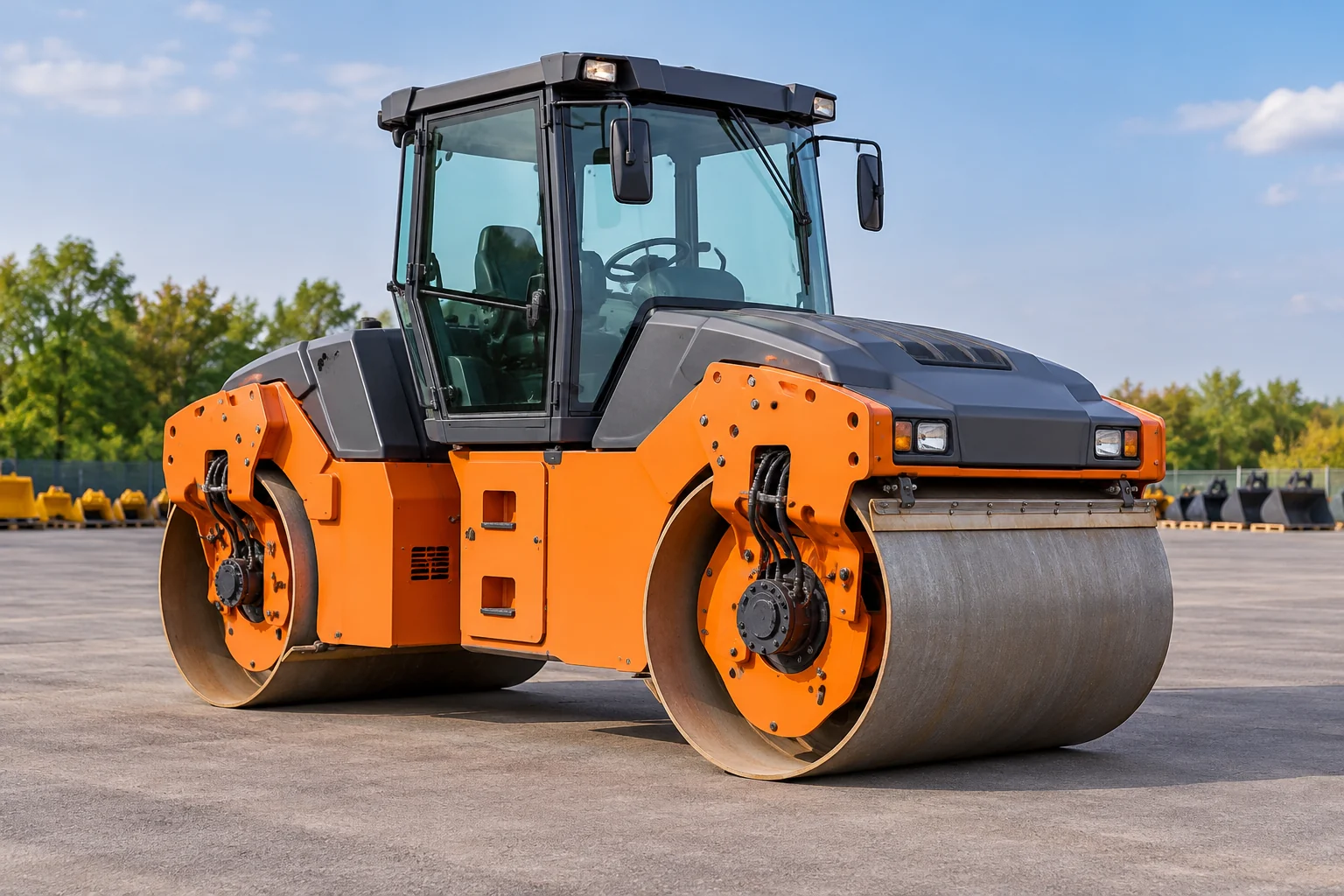
Road roller cost starts with the type of compaction equipment your work requires. A small tandem roller, a larger soil compactor and a separate drum attachment are not equivalent purchases. Establish the required machine class first, then compare the exact unit’s price, condition, included equipment and delivery costs.
As one dated example, Dogface Equipment’s manufacturer inventory page showed a 2014 BOMAG BW120SL-5 double smooth drum compactor at a $21,000 sale asking price in material reviewed October 30, 2026. That single listing is not a road-roller market average, an appraisal or confirmation that the unit remains available. The seller’s detailed listing could not be independently retrieved, so hours and condition are not established here. (Dogface BOMAG inventory.)
Start by excluding the wrong comparisons
The phrase “road roller” covers equipment that can appear beside one another in a sales search without serving the same purchasing need. BOMAG maintains a separate asphalt-roller category; its product range should not be treated as one interchangeable machine. (BOMAG asphalt rollers.)
Ask your qualified equipment specialist to define the required category and configuration for your intended work. Then label each quote accordingly. A low price for a trench compactor or an attachment is not evidence that a complete ride-on roller of the required class should cost the same.
Your shortlist should clearly state:
- Complete machine or attachment.
- Exact model and drum configuration.
- Intended application, as confirmed by the appropriate specialist.
- Required size and site-access constraints.
- New or used condition.
- Included accessories and delivery scope.
This avoids a misleading price range built from unrelated products.
What changes a roller’s purchase budget?
Once the category is fixed, compare the particular units. Year and recorded hours are useful identifiers, but they do not replace a condition assessment.
| Cost question | Evidence to collect | Why it belongs in the budget |
|---|---|---|
| What is the seller actually selling? | Serial number, model and complete item list | Prevents comparison with an incomplete unit or attachment |
| What is its documented condition? | Independent qualified inspection and service records | Separates the asking price from known work |
| Which systems need attention? | Inspector’s findings and repair quotes | Converts vague concerns into identified costs |
| What comes with it? | Written inclusion list | Avoids paying twice or missing needed items |
| How will it reach the job or yard? | Transport quote for that machine | Keeps acquisition cost separate from seller location |
| When can it be accepted? | Seller-work and delivery commitments | Helps compare readiness, not only price |
Do not perform machine checks from an online buying article. Have qualified personnel assess the exact equipment and manufacturer requirements. This guide does not specify compaction settings, work methods or acceptance standards for a project.
Use the quoted price as one line—not the whole total
Suppose a paving business has two suitable used units under consideration. The following numbers are fictional, not BOMAG quotations or typical costs:
| Acquisition item | Roller A | Roller B |
|---|---|---|
| Equipment price | $24,000 | $29,000 |
| Identified pre-delivery work | $4,500 | $1,000 |
| Delivery | $2,500 | $1,000 |
| Limited acquisition subtotal | $31,000 | $31,000 |
Both reach the same subtotal before taxes, insurance and other costs. That does not make them equal. One may have more unresolved condition questions or a less certain completion date. The inspection and seller commitments still matter.
Keep a separate line for unquoted items. Do not hide them inside a generic “miscellaneous” number and then present the subtotal as final. If the seller cannot price a known requirement, the purchase budget is incomplete.
Compare ownership with the work already on your calendar
Buying can solve an availability problem, but the machine must match a repeatable need. List the specific jobs that would use the roller, when they occur and whether the dates are firm. Separate contracted work from opportunities still being discussed.
Then compare a realistic ownership plan with written rental or subcontract proposals for that same work. Include delivery and collection in the alternatives, and identify who carries maintenance or downtime responsibilities. Do not assume a rental price includes every charge or that owning eliminates transport expenses.
This is not a universal rent-versus-buy formula. It is a way to catch a simple mismatch: buying a specialized machine for a few uncertain dates while another part of the business needs the cash.
Turn the equipment choice into a documented request
The purchase file should contain the final machine quote, inspection findings, any seller-work agreement and the transport amount. Ask a funding provider which of those costs it will consider. The cost of the overall project and the amount eligible for equipment financing are not automatically identical.
Dengaro’s equipment financing requirements explain the starting information for a business equipment request. Confirm the exact transaction’s eligibility; do not treat a seller’s price or a monthly-payment illustration as an approval.
Can I get a reliable road roller price from one online listing?
You can get one seller’s advertised asking price. You still need a dated offer, current unit details and a suitable comparison group. A single older unit cannot establish new-machine pricing.
What should I request from a seller first?
Ask for the complete machine identity, current recorded hours, condition records and an itemized delivered offer. Those details make the next comparison useful—and reveal whether a low headline price actually fits your business.