
Used tractor financing: hours, condition and seller documents
Prepare a used tractor financing request with clear hours, condition, seller records and an itemized purchase. Includes a practical document checklist.
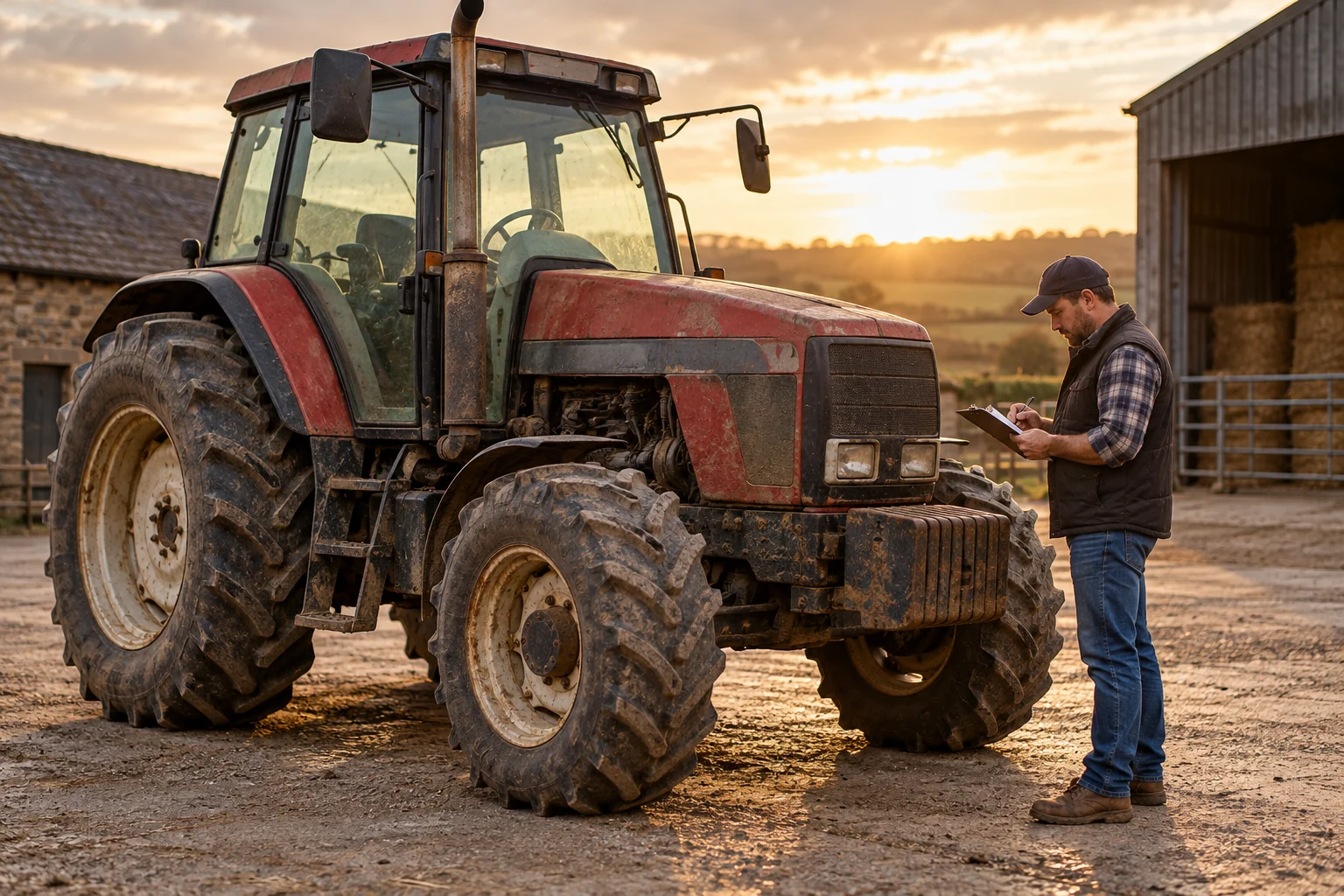
Financing a used tractor starts with a specific machine and a clear purchase record—not just a monthly payment. Gather the tractor’s model, serial number, hours, condition, service history and seller’s written price. Then ask the financing provider whether that tractor and that type of sale fit its program before you commit to the purchase.
A dealer sale, auction purchase and private transaction can call for different arrangements. This guide focuses on preparing a used tractor purchase for review, rather than comparing advertised farm loan rates.
Confirm the sale route before you make a commitment
Some agricultural lenders finance used equipment bought from dealers, auctions and private sellers. AgDirect, for example, offers those routes, but its private-party page lists a $25,000 minimum purchase price for auction and private-party transactions. That is AgDirect’s condition, not a universal rule or a Dengaro offer. AgDirect private-party financing
Before paying a deposit or bidding, ask your prospective provider:
- Does this program accept the seller and sale route?
- Does the tractor’s age, condition or intended use create a restriction?
- What equipment details are needed for a decision?
- What must happen before funds can be released?
- When must the seller receive payment, and can the proposed process meet that deadline?
Do not confuse an initial discussion with an unconditional commitment to fund a particular machine. Ask what remains outstanding, and get the answer in writing.
Build a one-page tractor record
Keep the advertisement, seller’s quote and inspection documents together. Use one record for each machine so you do not accidentally send one tractor’s price with another tractor’s photos.
| Field | What to collect | Question it helps answer |
|---|---|---|
| Identity | Make, model, serial number and year as represented by the seller | Which machine is being purchased? |
| Use | Work the tractor must perform and implements it must operate | Does the machine suit the purchase plan? |
| Hours | Current meter reading, photo and any known meter history | What does the seller know about its use? |
| Condition | Independent inspection findings and disclosed problems | What needs attention before use? |
| Service | Available maintenance and repair records | Which work is documented rather than assumed? |
| Seller | Seller’s name, contact details and business information if applicable | Who is responsible for the sale? |
| Package | Tractor and each included implement priced separately | What is actually included? |
| Delivery | Collection point, delivery quote and timing | What must happen to get it to your operation? |
This is a preparation worksheet, not a list of documents every lender requires. Ask your provider which records it needs and how to send them securely.
Read the hours alongside the condition
The hour meter is useful, but it is not an inspection report. Ask what work the tractor has done, whether the reading is believed to be accurate, and whether the meter has been replaced. Record a missing answer as unknown rather than filling the gap with an assumption.
AgDirect’s used-tractor guide recommends looking at working suitability, hours, engine performance, tires, hydraulics and maintenance history. It also suggests a local dealer or heavy-equipment mechanic for an inspection when the buyer cannot inspect the machine in person. AgDirect used-tractor buying guide
Have a qualified person evaluate the machine safely. This article is not a mechanical inspection procedure, and a financing decision should not replace one.
Try separating your notes into three columns:
- Documented: supported by a dated record or inspection.
- Seller-reported: stated by the seller but not yet independently checked.
- Unknown: information still missing.
For example, “hydraulic work completed” is less useful than a dated invoice identifying the repair and the tractor. If there is no invoice, keep the seller’s statement in the second column. That makes the remaining questions visible before money changes hands.
Make private-seller paperwork specific
A private purchase may not arrive with a dealer’s prepared document package. Ask the financing provider what purchase agreement or bill of sale it will accept, what seller information it needs, and how it checks ownership and any outstanding claims against the equipment.
If the seller says there is a remaining loan on the tractor, do not invent a payment arrangement between yourselves. Ask the financing provider how that situation must be handled and what evidence it requires before closing. Get qualified legal help if ownership or rights to sell are disputed.
Your written purchase description should distinguish the tractor from anything shown in the photos but not included. Confirm whether the loader, bucket, mower, weights, guidance equipment or other implements are part of the deal. A picture is not a substitute for an itemized agreement.
Separate the purchase price from your start-up cash
Here is an invented planning example, not a price estimate or financing offer:
| Item | Hypothetical amount |
|---|---|
| Used tractor | $42,000 |
| Included loader, separately itemized | $6,000 |
| Equipment purchase subtotal | $48,000 |
| Quoted transport | $1,200 |
| Inspection allowance | $500 |
| Repair reserve you choose to retain | $3,000 |
| Total planning amount before any unlisted taxes or charges | $52,700 |
The equipment subtotal and total cash plan are different numbers. Do not assume that transport, inspection or a reserve is financeable. Ask the provider which items it will include, and record your own cash contribution separately.
A repair reserve is also not proof that it is safe to buy a machine with unresolved faults. Have the faults assessed and the purchase terms reviewed first.
Send one consistent package for financing review
Before submitting the request, check that the serial number and price agree across the quote, photos and inspection record. Flag missing information and known problems rather than leaving the provider to discover a mismatch later.
For a possible request through Dengaro, start with the equipment financing requirements. Confirm the provider’s support for the particular tractor, its intended business use and the seller’s transaction before making a purchase commitment. A prepared file does not guarantee approval.
Common questions
Can I finance a used tractor from a private seller?
Some lenders support private-party agricultural equipment purchases. Check the specific program’s minimum purchase amount, equipment rules, seller requirements and closing process. Do not assume a dealer-financing offer applies to a private transaction.
Is there one maximum number of hours a financed tractor can have?
Do not rely on a universal cutoff. Ask the financing provider about its equipment rules, and have a qualified inspector assess the tractor. Hours, condition and supporting records answer different questions.
Should implements be on the same quote?
Ask the provider how to present the package, and have the seller identify and price each item. Do not include equipment that is only pictured, not actually part of the sale.
Does loan approval mean the tractor is mechanically sound?
Do not treat a credit decision as a mechanical warranty. Arrange the inspection and confirm what, if any, seller warranty or protection applies in writing.