
Vacuum and septic truck financing: purchase planning, costs and requirements
Prepare a vacuum or septic truck purchase file with installed-system records, qualified condition findings and an itemized financing gap.
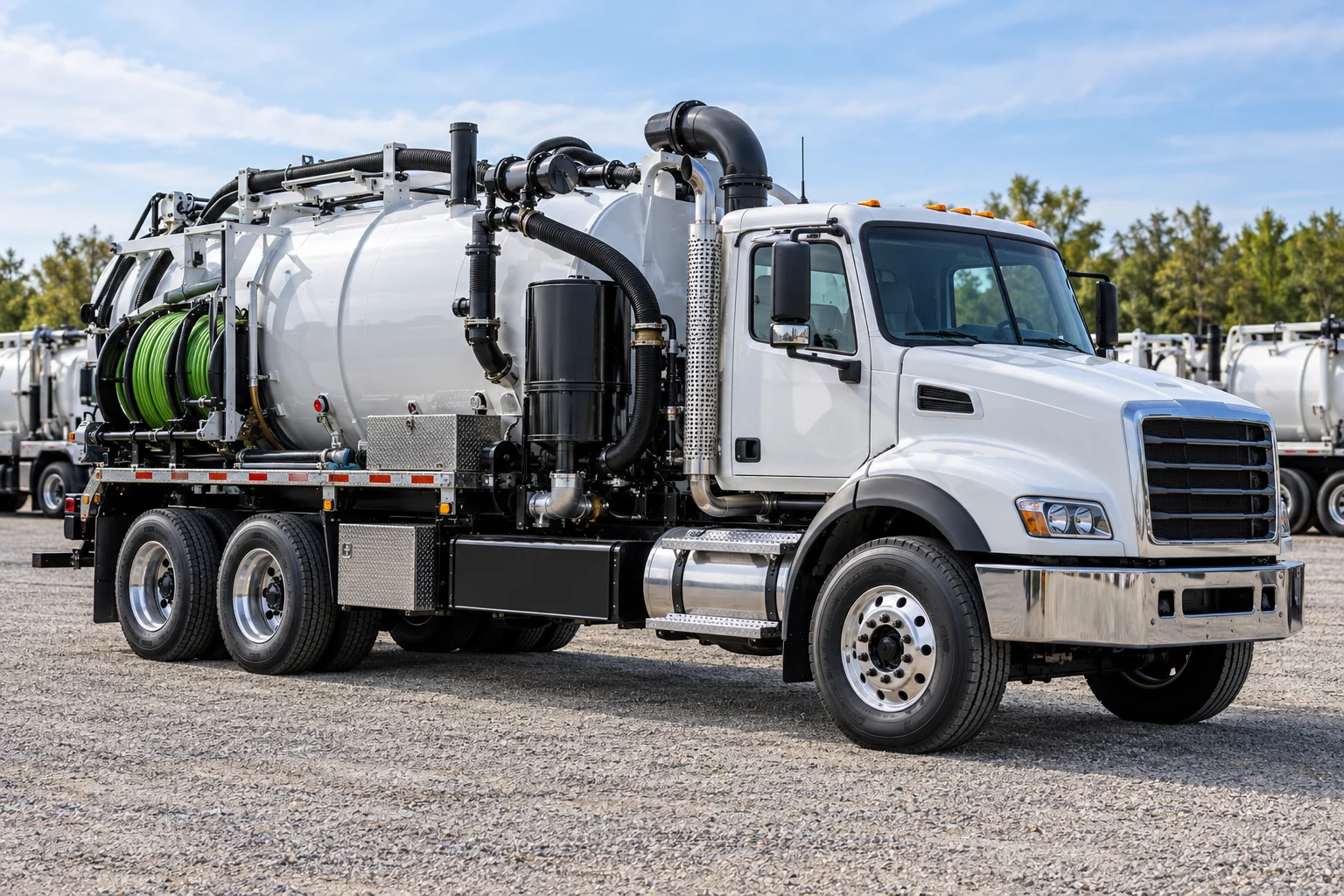
Vacuum and septic truck financing should be based on the complete truck configuration, its condition and the work the business intends to perform. A chassis price alone does not describe a functioning vacuum-truck purchase, and a generic truck approval does not establish that the provider supports the specialized equipment or transaction.
VacSource's financing page, reviewed October 30, 2026, describes working with financial partners for vacuum-truck purchases. Its inventory separates several specialist equipment categories. This shows a supplier-specific financing route exists; it does not guarantee approval, terms or eligibility through that supplier or Dengaro. VacSource financing
This guide covers procurement and financing preparation. It does not provide waste-handling, tank-entry, cleaning, disposal or equipment-operating instructions.
Define the service before the truck package
Write a plain-language description of the work the business needs the truck to support. Have qualified specialists determine the required configuration and relevant permissions. Do not assume different vacuum, sewer-cleaning, hydro-excavation and septic-service equipment can substitute for one another.
Ask the seller to identify what the proposed unit includes and what it does not. Keep the intended work description with the quote so the equipment discussion and financing request refer to the same purchase.
A customer opportunity can help explain the business case, but it is not proof that the equipment is suitable or that the work is authorized. Those checks remain separate.
Build a component-level purchase record
Request a record for the chassis and a separate inventory of the installed specialist equipment. Include exact identification where available, the seller's ownership documentation, service records and the components included in the sale.
| Purchase component | Information to obtain |
|---|---|
| Chassis | Exact unit, condition, available records and identified required work |
| Tank and installed system | Configuration, identification and qualified condition assessment |
| Pump or vacuum equipment | Included model, available service records and support arrangements |
| Hoses and accessories | Actual inventory, condition and exclusions |
| Controls and other fitted equipment | What is included and what support is available |
| Delivery and handover | Responsible parties, timing and agreed acceptance scope |
This is a documentation checklist, not a technical inspection procedure. Use qualified personnel to determine the appropriate inspection and assessment for the equipment and intended work.
For a rebuilt or modified truck, ask who completed the work and what records support the configuration. Do not assume a newer chassis date means every installed component is equally new.
Separate seller statements from verified findings
Keep the seller's description, inspection findings and agreed repairs in distinct sections. A phrase such as “ready to work” is not a substitute for a defined condition report and acceptance criteria.
If the inspection identifies unresolved work, ask for a written estimate and clarify who will complete it. Do not remove that cost from the business case merely because the finance provider will not fund it.
For a private-party transaction, ask the proposed provider early what seller and ownership documentation it needs. Do not assume the paperwork or funding process is identical to a dealer purchase.
Make the funding gap visible
Here is a fictional acquisition example, not a truck-price estimate or lender quote:
| Item | Hypothetical amount |
|---|---|
| Defined truck and installed equipment | $165,000 |
| Qualified assessment and identified work | $12,000 |
| Delivery | $4,000 |
| Additional required accessories | $7,000 |
| Listed acquisition requirement | $188,000 |
If the proposed funding covers $160,000, the listed gap is $28,000. That is before operating reserves and any costs excluded from this example. The actual provider must confirm what it will consider and when funds can be released.
Do not assume the truck will immediately earn revenue upon delivery. The business may need time for required checks, customer acceptance, staffing or other arrangements. Plan cash timing without inventing a standard launch period.
Compare financing at the same endpoint
Ask each provider to describe the upfront payment, payment schedule, fees, final obligations and ownership outcome. A lower monthly payment can reflect a larger amount left for later rather than a lower total obligation.
For an invented comparison, $15,000 upfront plus 48 payments of $3,600 totals $187,800 in listed cash. A second structure with $5,000 upfront, 48 payments of $3,100 and a $38,000 final amount totals $191,800. The second monthly payment is lower, but the listed total is $4,000 higher.
These figures are simple arithmetic, not APR calculations or offers. The real comparison also needs equivalent equipment, timing, fees and contractual rights. Have appropriate advisers review legal, accounting and tax questions.
Keep operating capability outside the approval assumption
Ask the business team which ongoing costs remain after acquisition. These can include staffing, maintenance, insurance and other expenses specific to the actual service. Qualified advisers should determine applicable requirements; this article does not establish them.
If the purchase depends on a particular customer, show what happens if the work is delayed or reduced. Do not treat a forecast or verbal opportunity as a guaranteed revenue stream.
Equipment-finance approval addresses the provider's transaction decision. It does not certify technical suitability, authorize a service, confirm disposal arrangements or validate the business's revenue assumptions.
Common purchase questions
Can a used septic truck be financed?
Ask about the specific unit, condition, seller and transaction. A general statement about used equipment is not an approval for the truck you found.
Can repairs and accessories be included?
Provide separate quote lines and ask the provider. Keep excluded amounts in the cash plan instead of assuming they disappear from the purchase requirement.
Should I buy the largest tank I can afford?
Have qualified equipment and operations specialists determine the configuration for the actual work. Purchase price or nominal tank size alone does not establish suitability.
Submit one consistent purchase file
Align the service description, exact equipment inventory, condition findings and itemized funding request. Review Dengaro's equipment-financing requirements, then start an enquiry if you want to explore the transaction. Specialized eligibility, covered costs, approval and terms remain subject to provider review.