
Vending machine startup costs: equipment, setup and cash reserves
Build a vending startup budget that separates machines, deployment, opening stock and cash reserves from unconfirmed sales assumptions.
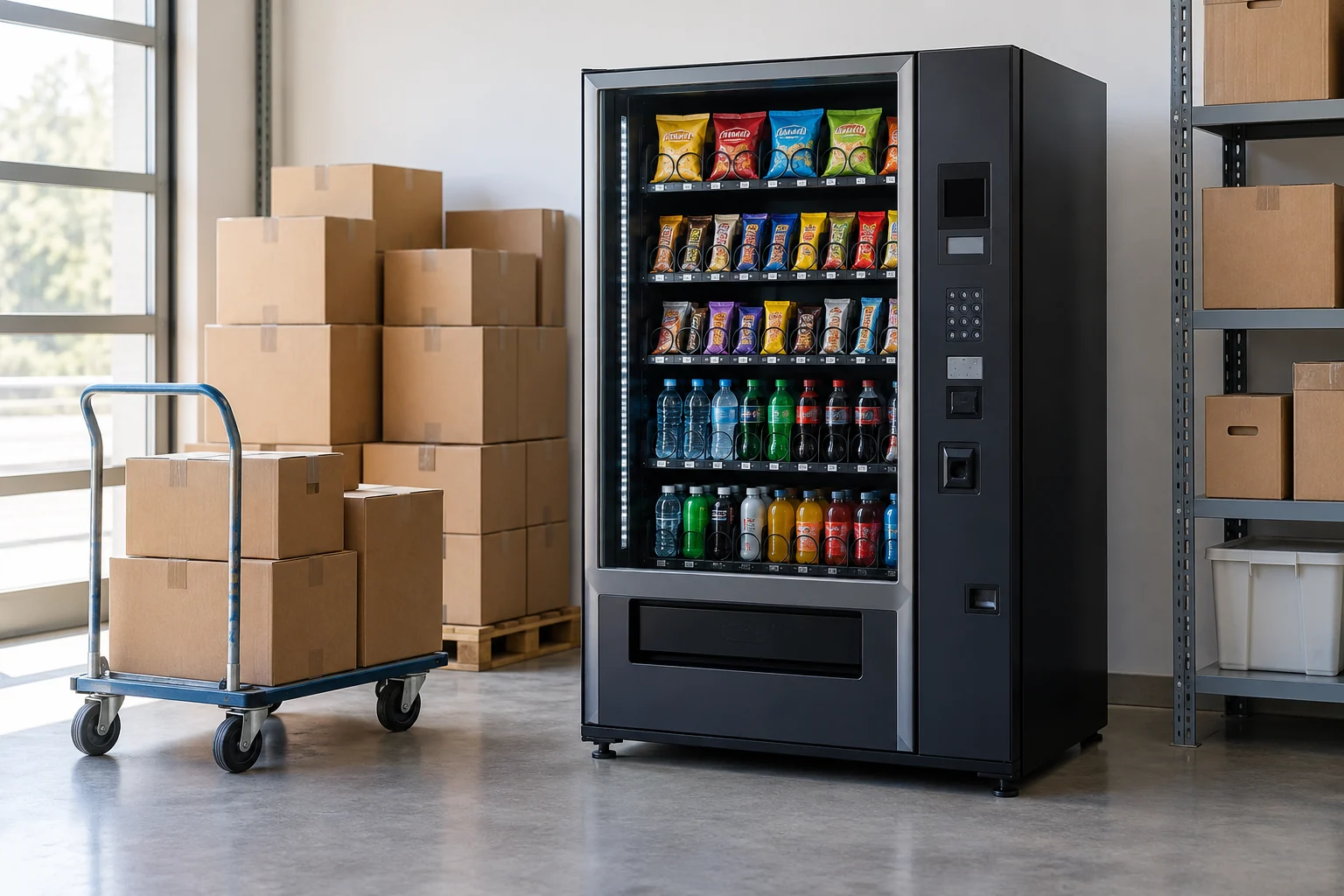
Vending machine startup costs include more than the machine: product inventory, delivery, payment setup, location-related expenses and cash to keep the route running before sales become predictable. Build the budget around specific locations and machines rather than multiplying a headline machine price by the number you hope to own.
Vending.com's cost guide separates equipment, inventory, delivery and business setup. It is a supplier's own guide, not a universal startup quote. Use its categories to identify missing items, then replace estimates with current written quotes and your own documented assumptions. Vending.com cost guide
This article covers the launch budget and timing of cash needs. It does not promise a profitable location, passive income or a standard payback period.
Build the location plan before the shopping list
For each proposed placement, record what is agreed and what remains uncertain. Identify the machine type, access arrangements, delivery constraints and who pays each relevant expense. Have appropriate advisers review location terms and applicable requirements.
Do not buy a machine based only on a verbal expression of interest. A potential host may still need internal approval or may have conditions that change the equipment choice. Record the evidence you have instead of counting every conversation as a secured location.
Keep three groups in the budget: confirmed placements, placements awaiting approval and future ideas. Only the first group should be treated as a firm launch plan. If the business intentionally buys ahead, label the storage and delayed-deployment risk.
Separate one-time purchases from recurring costs
| Budget group | Examples to price or assess |
|---|---|
| Equipment | Machines, included payment hardware and necessary accessories |
| Deployment | Delivery, placement, setup and any required site work |
| Opening stock | Initial products and supplies for confirmed locations |
| Business setup | Costs identified by appropriate business and local advisers |
| Recurring operation | Restocking, processing, connectivity, service and agreed location payments |
| Cash reserve | A documented allowance for timing gaps and unexpected costs |
Do not assume every business needs every item or that a fixed allowance covers local requirements. Obtain the relevant advice and quotes. This is a budgeting framework, not a legal-registration checklist or food-handling guide.
Payment technology deserves its own line. Ask what hardware is included, which account must be opened, what recurring charges apply and how proceeds reach the business. A machine equipped for cashless payment is not the same as an activated, transferable processing arrangement.
Put the cash needs on a timeline
A launch can look affordable in total but still face a cash gap before the first machine is placed. List when deposits, remaining equipment payments, delivery charges and inventory purchases are due.
Then identify when funds are actually available. A financing proposal may have conditions before release. A location agreement may not mean the site is ready for delivery. Avoid planning as if every date will align automatically.
Use a simple week-by-week view:
- Before ordering: confirmed costs, deposits and unresolved location conditions.
- Before delivery: balances, transport, access and setup arrangements.
- Before opening: stock, accounts and required checks.
- After opening: restocking, service, agreed location payments and financing obligations.
Replace the weeks with actual dates when the responsible parties confirm them. Do not count forecast sales as cash already available to pay an earlier invoice.
A fictional three-location launch budget
The following figures are invented to demonstrate the worksheet, not supplier prices or a typical vending startup:
| Item | Assumed amount |
|---|---|
| Three specified machines | $24,000 |
| Delivery and setup | $3,000 |
| Opening inventory | $2,400 |
| Separately quoted payment setup | $900 |
| Other business setup | $1,200 |
| Initial cash reserve | $4,500 |
| Total planned cash requirement | $36,000 |
If an equipment provider agrees to finance only the $24,000 machine purchase, the plan still needs $12,000 from another source. That difference includes both spending and a reserve; it should not be described as another machine price.
Check whether the payment setup is already included in a machine quote before adding it again. The same applies to delivery and initial supplies. A useful budget avoids both missing costs and double counting.
Test a delayed opening, not just lower sales
Suppose one of the three locations in the fictional example is delayed. Ask which costs can wait and which obligations remain. You may already own the machine, owe a payment and need storage even though that location is not yet producing revenue.
Build a second scenario with the delayed site excluded from early sales. Keep the remaining costs honest. Do not reduce every expense proportionally if the business still needs the same vehicle, insurance arrangement or service support.
A reserve should be linked to identifiable risks and timing assumptions. There is no universal reserve amount in this article because the right figure depends on the actual plan. Revisit it when quotes, placement dates or payment terms change.
Forecast cash left after costs, not gross sales alone
Use location-specific assumptions and track what supports them. Separate product purchases, location payments, processing costs and other operating expenses from gross receipts.
For example, an invented location with $1,000 of receipts and $700 of listed operating costs has $300 left before costs omitted from that list. It is not automatically $300 of profit or cash available for a machine payment. Owner labor, taxes, financing and other expenses may still need consideration.
Do not present a supplier's sales illustration as what your location will earn. After launch, replace assumptions with actual records and examine why results differ. A weak location may need a business decision, not a more optimistic spreadsheet.
Common startup-budget questions
What is the minimum amount needed to start?
There is no reliable single number without a defined machine, location and deployment plan. Price the actual purchase and keep ongoing cash needs visible.
Should I buy several machines to reduce delivery costs?
Compare the documented saving with the cost and risk of additional machines. A larger order is not a saving if the business has no suitable placements for it.
Does equipment financing cover the whole startup budget?
Not necessarily. Ask about every item. Inventory, business setup, location costs and cash reserves should not be assumed eligible because the machines are eligible.
Fund the launch, not only the machines
A complete plan shows the purchase, deployment dates and cash that remains outside equipment financing. Review Dengaro's equipment-financing requirements and start an enquiry if you want to explore the genuine equipment portion. Provider review determines eligibility, approval and terms; it does not validate the business's revenue forecast.