
Wood chipper cost: a commercial buyer’s budget guide
Commercial wood chipper cost depends on the exact machine, age, hours, condition and included equipment.
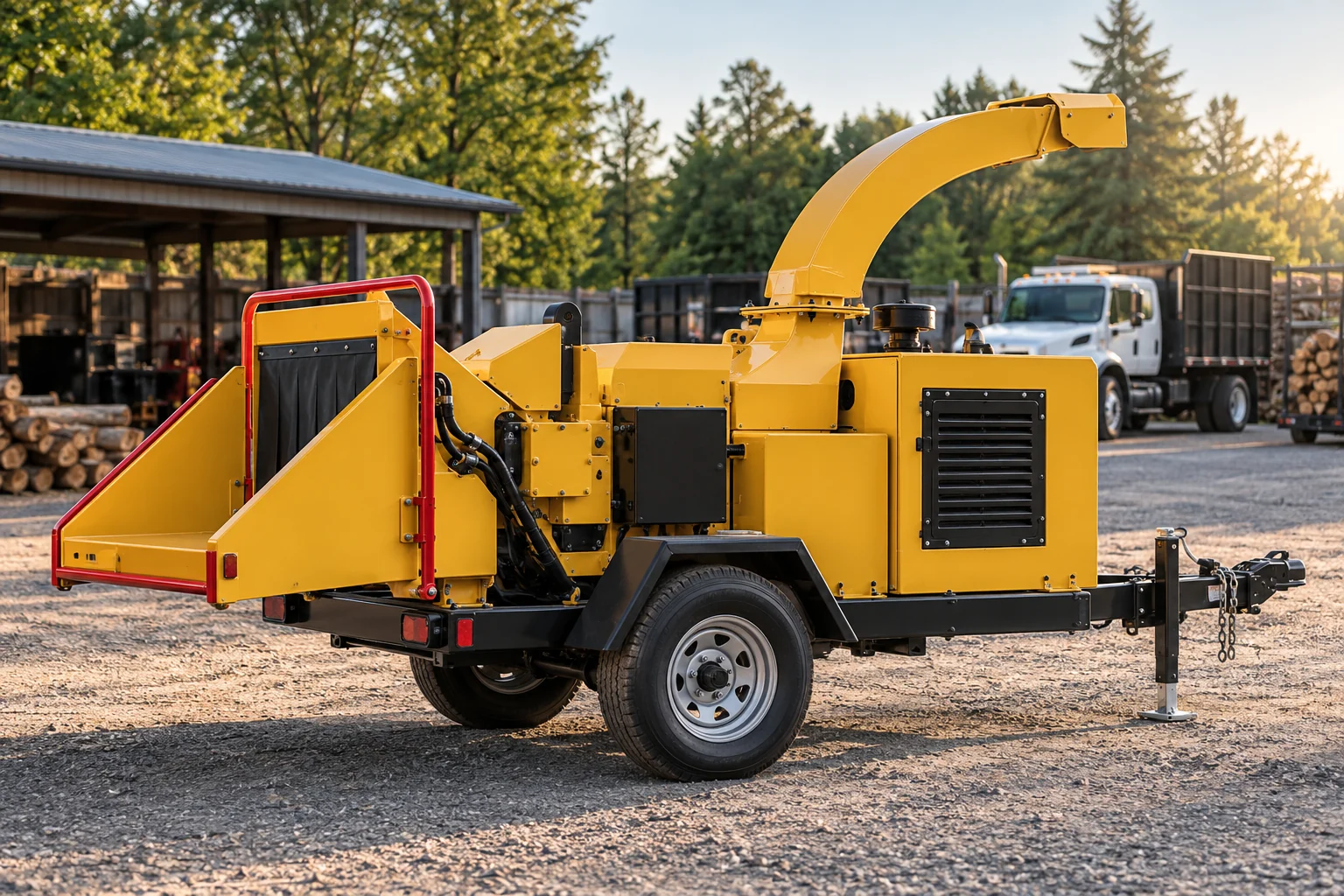
Commercial wood chipper cost depends on the exact machine, age, hours, condition and included equipment. Two dealer examples reviewed on October 30, 2026 were a 2023 Vermeer BC1000XL listed at $38,500 and a 2021 Vermeer BC1500 listed at $27,500. Those are specific used-machine asking prices, not a market range or confirmation that either unit remains available.
The purchase decision needs more than a price beside a model number. For a tree-service or landscaping business, the useful budget includes the selected chipper, inspection, any identified work, delivery and the transport arrangement needed for the business's actual jobs.
This guide addresses procurement, not chipper operation, maintenance procedures or worksite safety.
What the two price examples include—and leave open
| Dealer listing | Reported hours | Asking price | Reference |
|---|---|---|---|
| 2023 Vermeer BC1000XL | 170 | $38,500 | Vermeer MidSouth, stock 1000XL-3007U |
| 2021 Vermeer BC1500 | 1,749 | $27,500 | Vermeer Wisconsin, stock 150012084UUU |
The MidSouth BC1000XL listing and Wisconsin used-equipment page were reviewed on October 30, 2026. Retrieved copies were cached roughly two days and two weeks earlier, respectively. Confirm price, availability, condition and included items with each seller.
These are different models with different reported histories. The lower price of the BC1500 does not prove that it is the better purchase or establish how either model should depreciate. Nor does a seller's favorable condition description replace an independent assessment.
Do not apply these commercial brush-chipper examples to small residential shredders or to other equipment such as stump grinders. They answer different purchase needs.
Define the workload before requesting quotes
Tell the supplier what the business needs to accomplish, then have qualified personnel assess which configuration fits that work. Include the type of jobs, the material involved, the frequency of use and the transport constraints.
Ask for the supplier's recommendation against your written brief rather than buying on a broad capacity claim alone. A machine selected for occasional cleanup may not be the right purchase for a business whose daily contracts depend on it. This guide does not establish safe material limits or operating methods for any model.
Keep a procurement record with:
- The exact model and serial number where available.
- The intended commercial role.
- Included equipment and options.
- The seller's condition disclosures.
- The qualified inspection scope.
- The delivery and transport plan.
- The support and warranty terms.
That record makes it easier to compare offers and explain the transaction to a financing provider.
Turn the asking price into a project total
Here is a fictional budget, not a quote or expected price for either listed unit:
| Cost line | Illustrative amount |
|---|---|
| Used commercial chipper | $35,000 |
| Independent inspection | $500 |
| Delivery | $1,500 |
| Agreed work before acceptance | $3,000 |
| Initial project subtotal | $40,000 |
The subtotal excludes taxes, finance charges and any separate truck purchase. It also excludes ongoing labor, fuel and maintenance. Those costs should appear in a separate ownership forecast.
If the financing proposal covers only the $35,000 asset invoice, the business still needs $5,000 for the other listed items. Ask which charges can be included; do not assume the entire project is eligible.
Keep the repair line evidence-based. An allowance can help you plan before inspection, but it is not a guarantee that all defects can be fixed within that amount. Replace assumptions with written findings and quotes before making a final decision.
Evaluate condition without treating hours as the verdict
Reported hours help describe the machine's history, but they do not establish its present condition. Request service records and have a qualified professional assess the equipment. This article does not provide repair or inspection procedures.
Ask the seller which work has actually been completed and which work is merely recommended. If a listing mentions replacement parts or recent service, request supporting documentation. Keep promises about pre-delivery work in the purchase agreement.
For warranty coverage, ask what components and labor are included, how long coverage lasts and who performs the work. Do not assume a used unit retains the terms that applied when it was new.
Also ask for the practical support route: the nearest qualified service provider, likely scheduling process and how replacement parts are obtained. A vague statement that parts are available is less useful than knowing who your business will contact when it needs help.
Account for the equipment around the chipper
A commercial chipper rarely moves between jobs by itself. Have the supplier and a qualified transport professional confirm the requirements for the actual configuration. Do not use a generic weight or a photo to decide whether an existing vehicle is suitable.
Separate the one-time delivery cost from the ongoing cost of moving the equipment. If another vehicle or trailer arrangement is required, budget it explicitly rather than treating it as a minor accessory.
Storage and collection timing also matter. Ask when the machine must be collected, whether the seller charges storage and what happens if delivery is delayed. Those terms can affect cash needs even before the machine enters service.
Compare ownership with the alternative job plan
A chipper may support a business's existing workflow, but buying one does not automatically create additional contracts or eliminate disposal and transport costs. Keep the investment case tied to work that is actually likely to occur.
Build a short comparison using the same jobs under two scenarios:
- Continue the current rental, subcontracting or equipment arrangement.
- Buy the proposed machine and include its associated ownership costs.
Record which costs change and which remain. For example, a crew or vehicle expense may continue under both scenarios. Do not count it as a saving simply because the equipment is owned.
Use a quieter-season scenario as well. If the purchase only works when every week is fully booked, the business should understand that dependency before accepting a payment obligation.
Common questions
Why can an older or different model cost less?
Condition, hours, configuration, seller terms and market circumstances can all differ. Two listings do not isolate any one factor. Compare the actual machines and supporting records.
Is the advertised price the amount to finance?
Not automatically. Prepare an itemized purchase and ask which costs the provider supports. Delivery, taxes, service or repairs may need separate treatment.
Can a used commercial chipper be financed?
That depends on the provider, equipment, age, condition, seller and borrower. Confirm the exact transaction before paying a deposit on the assumption that financing is available.
Make the next step specific
Once the quote and inspection are clear, review Dengaro's equipment financing requirements. Ask about the exact chipper, seller and supporting costs. Approval and terms depend on provider review; the dealer examples above are not promises of availability or financing.